EXHIBITIONS
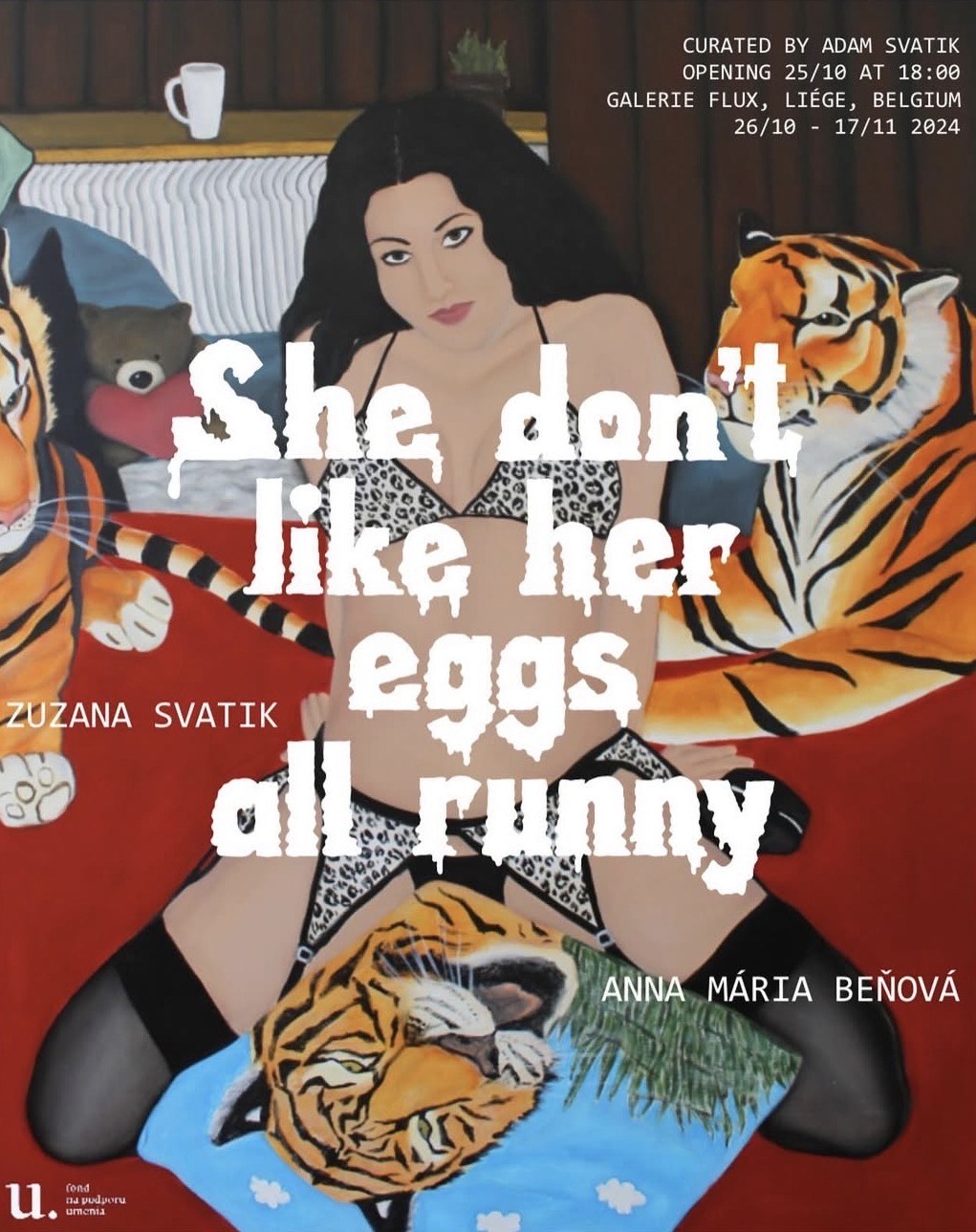
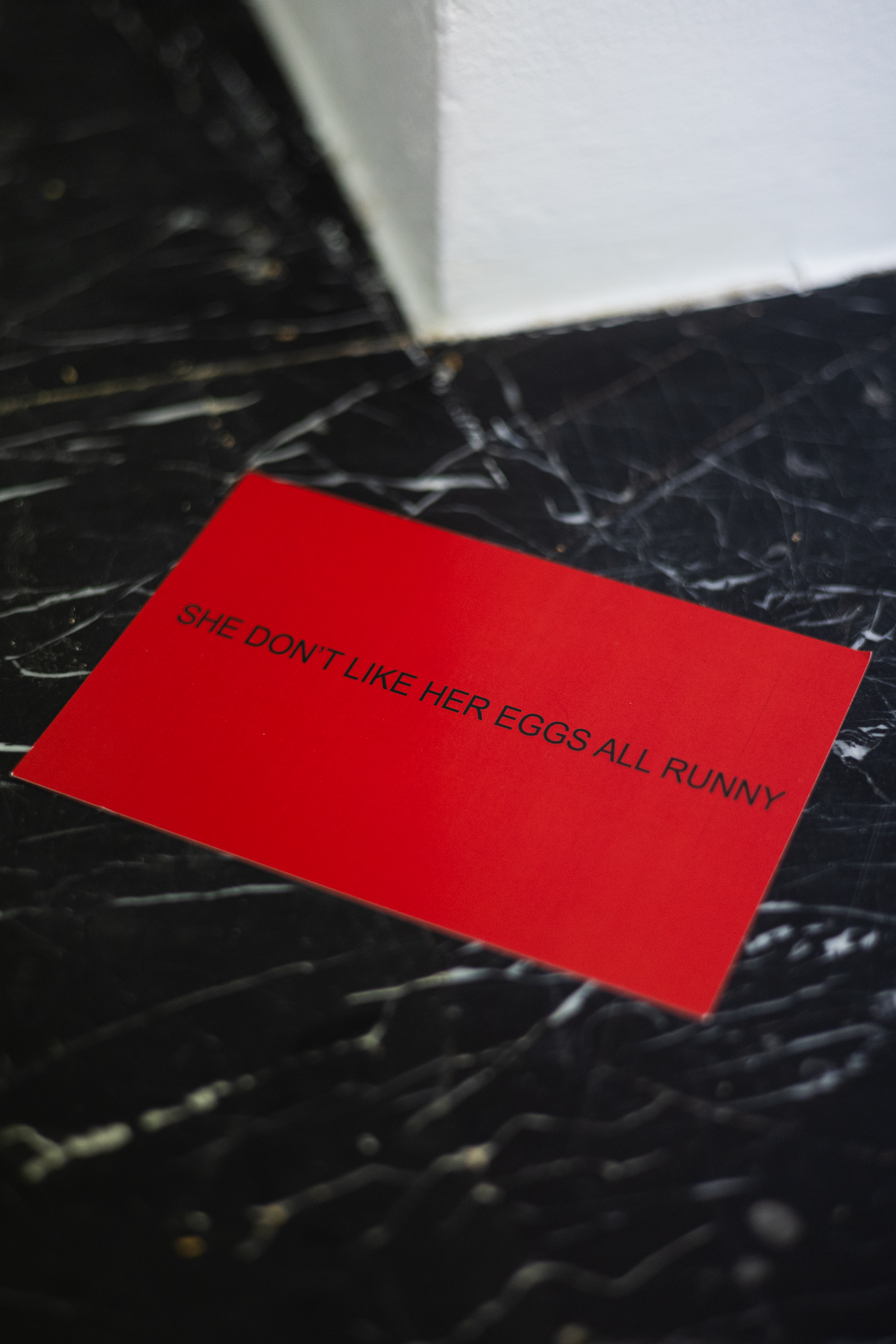
SHE DON’T LIKE HER EGGS ALL RUNNY
2024
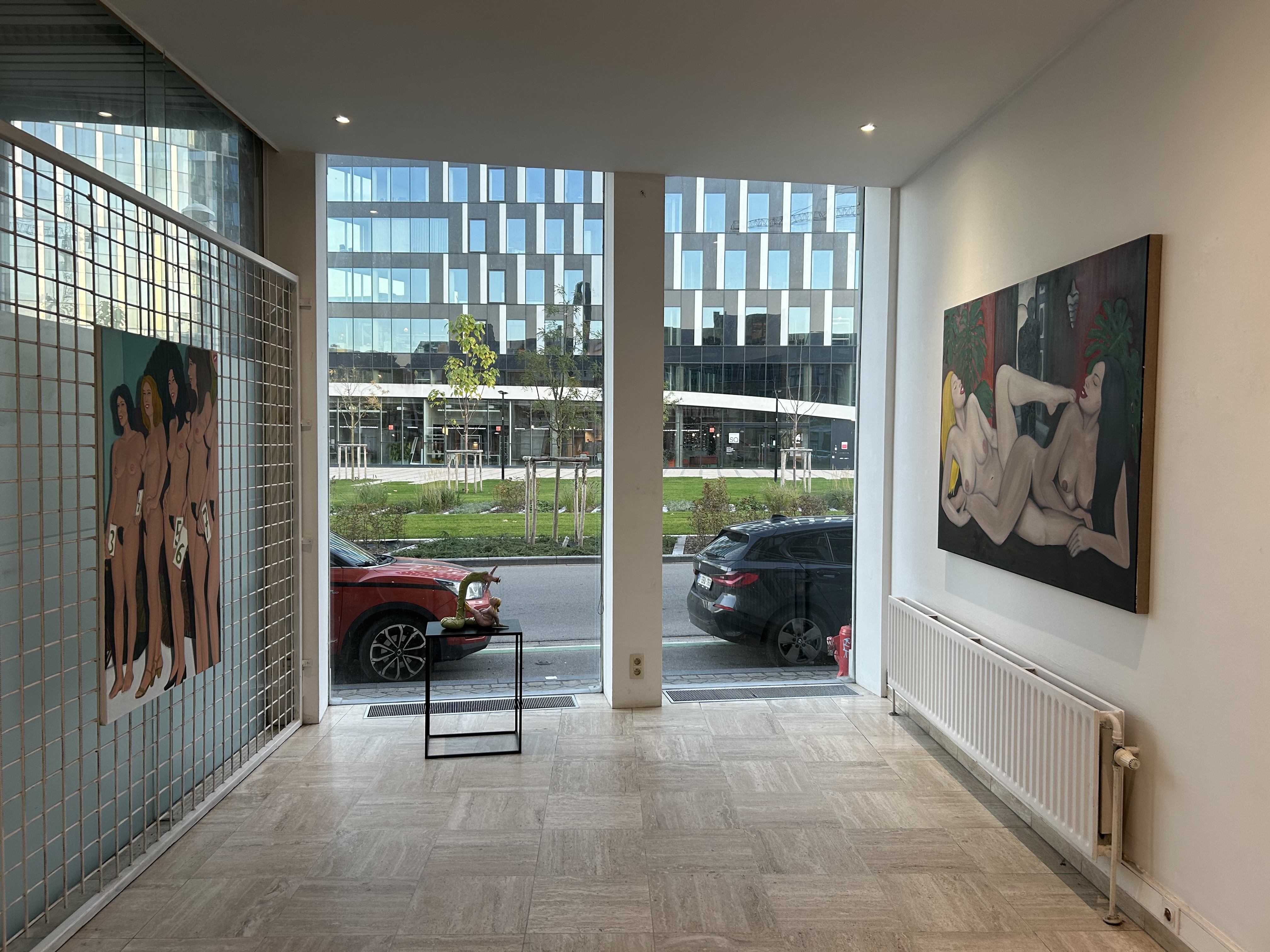
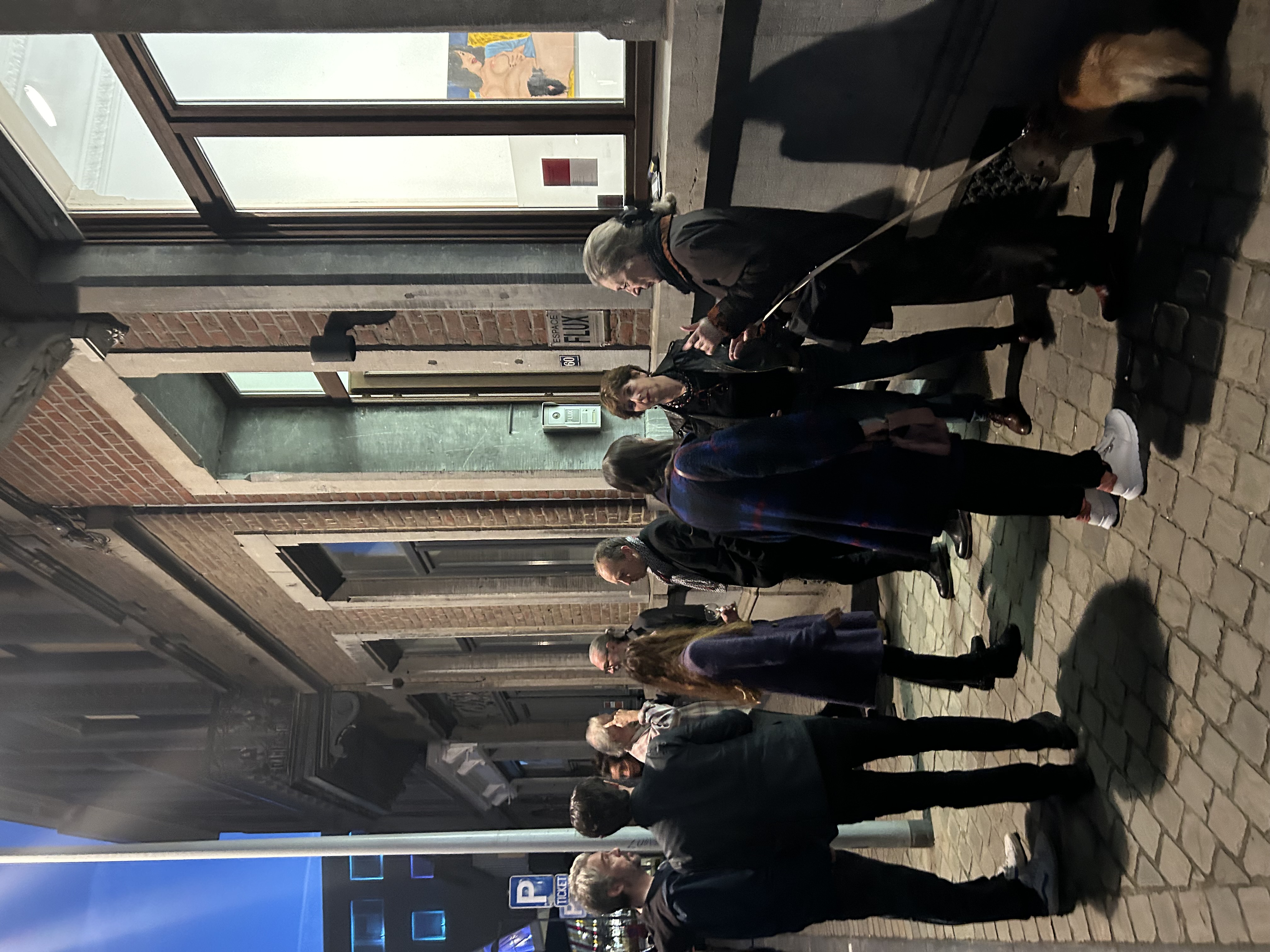
Espace Galerie Flux, Liège, Belgium
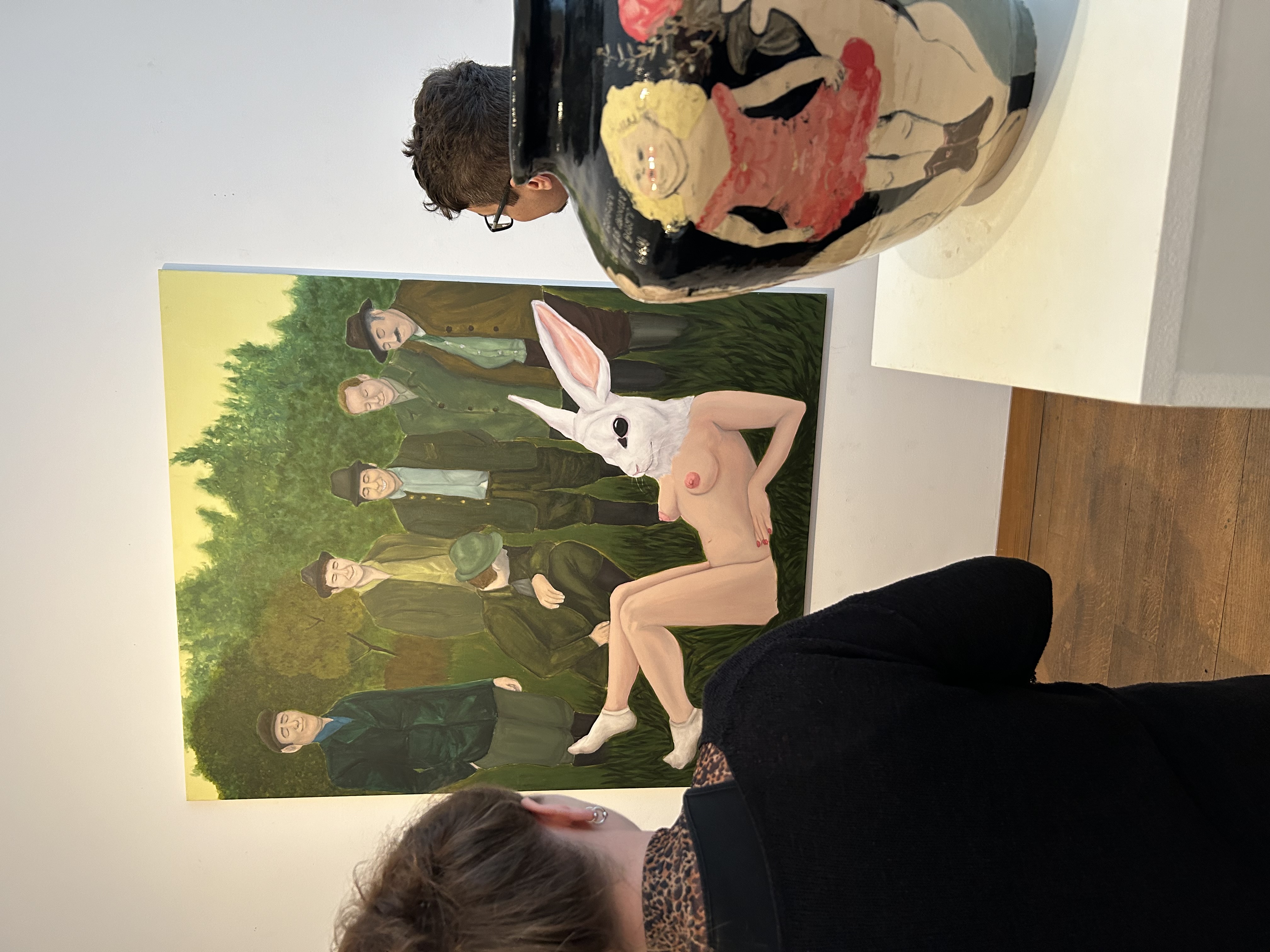
A woman lies on her back, paws in the air, wearing dirty socks and a grotesque, creepy rabbit head. Six men surround her. One kneels beside her but turns his face away, another wears a foolish smile, and his neighbors seem to approve, their eyes closed. The scene is open to all sorts of interpretations. Is this woman joyful, complicit, or a hunted animal destined to become a trophy? The color of her socks suggests she has been running, but was it for fun or to escape? What is she thinking beneath her mask? Is she even thinking? And what about them? And us?
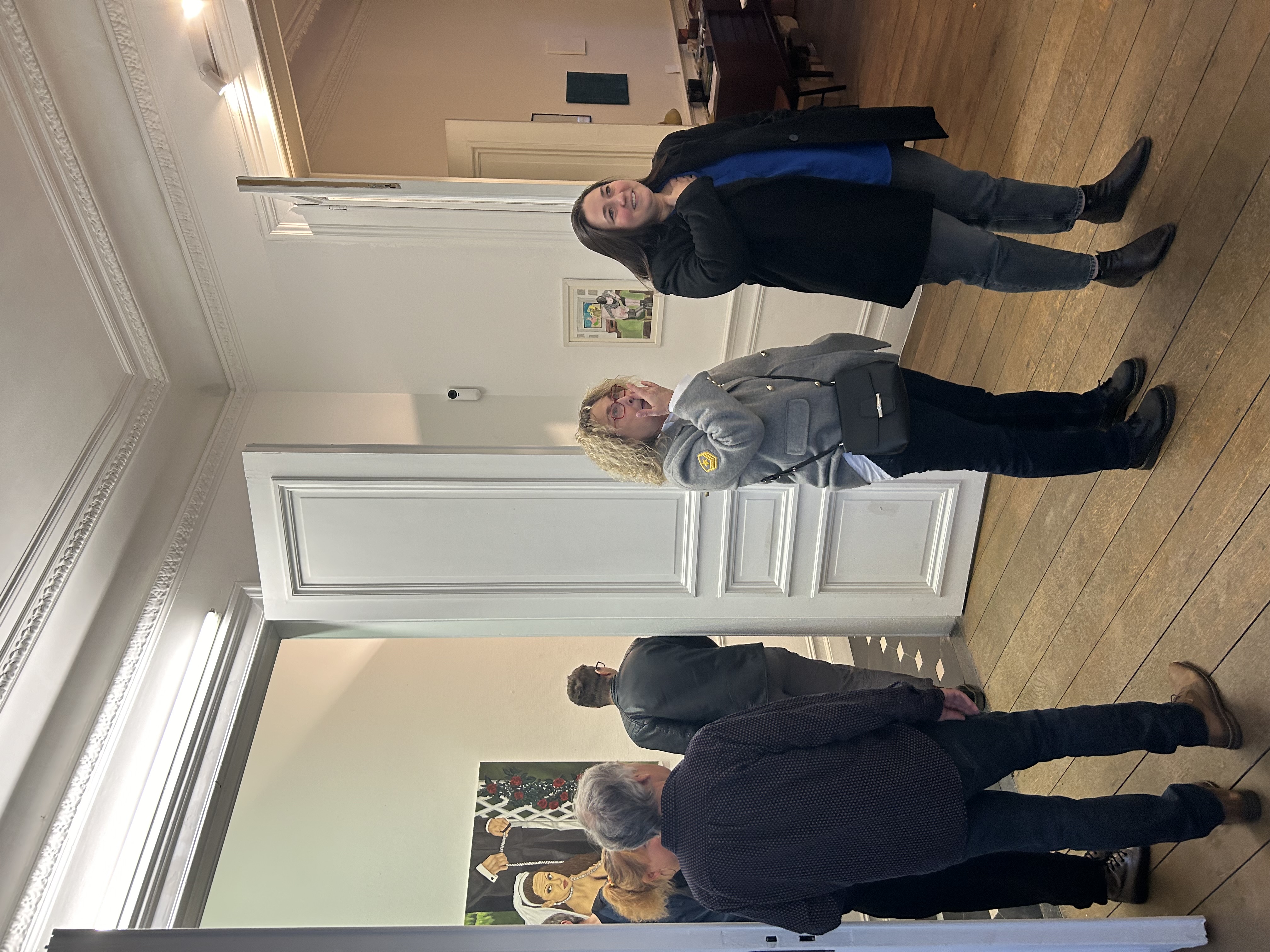
The more we wander among the works of Anna Mária Beňova and Zuzana Svatik, the less dreamlike these ironic fictions seem.
In all the scenes depicted by the two artists, there's a certain grating, a slightly unsettling quality. We laugh, but it's a nervous laugh, then it continues once we're outside, and we want to go back and see, ask a whole bunch of questions, talk about it to figure out what to do with all of this.
Anna Mária Beňova, a painter, and Zuzana Svatik, a ceramicist, are Slovak. As if to further anchor their work in modernity, it was Instagram that indirectly brought them together here in Liège, at the Flux Gallery.
It all began with Michaël Dans's artistic admiration for their work, followed by the virtual friendship that developed between Anna Mária and the Liège-based artist; shared references, a similar sense of humor, and exchanges about their respective creative processes.
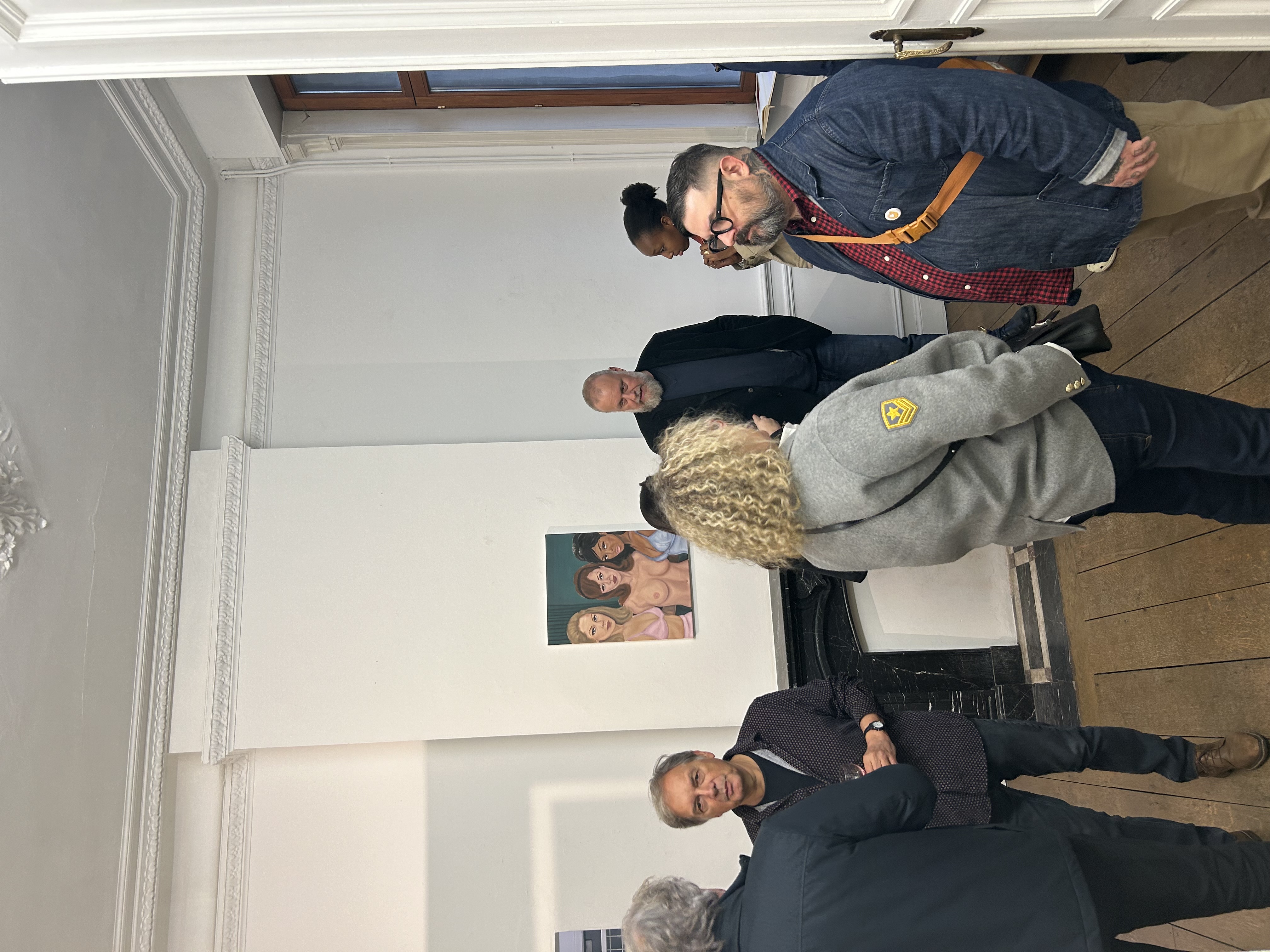
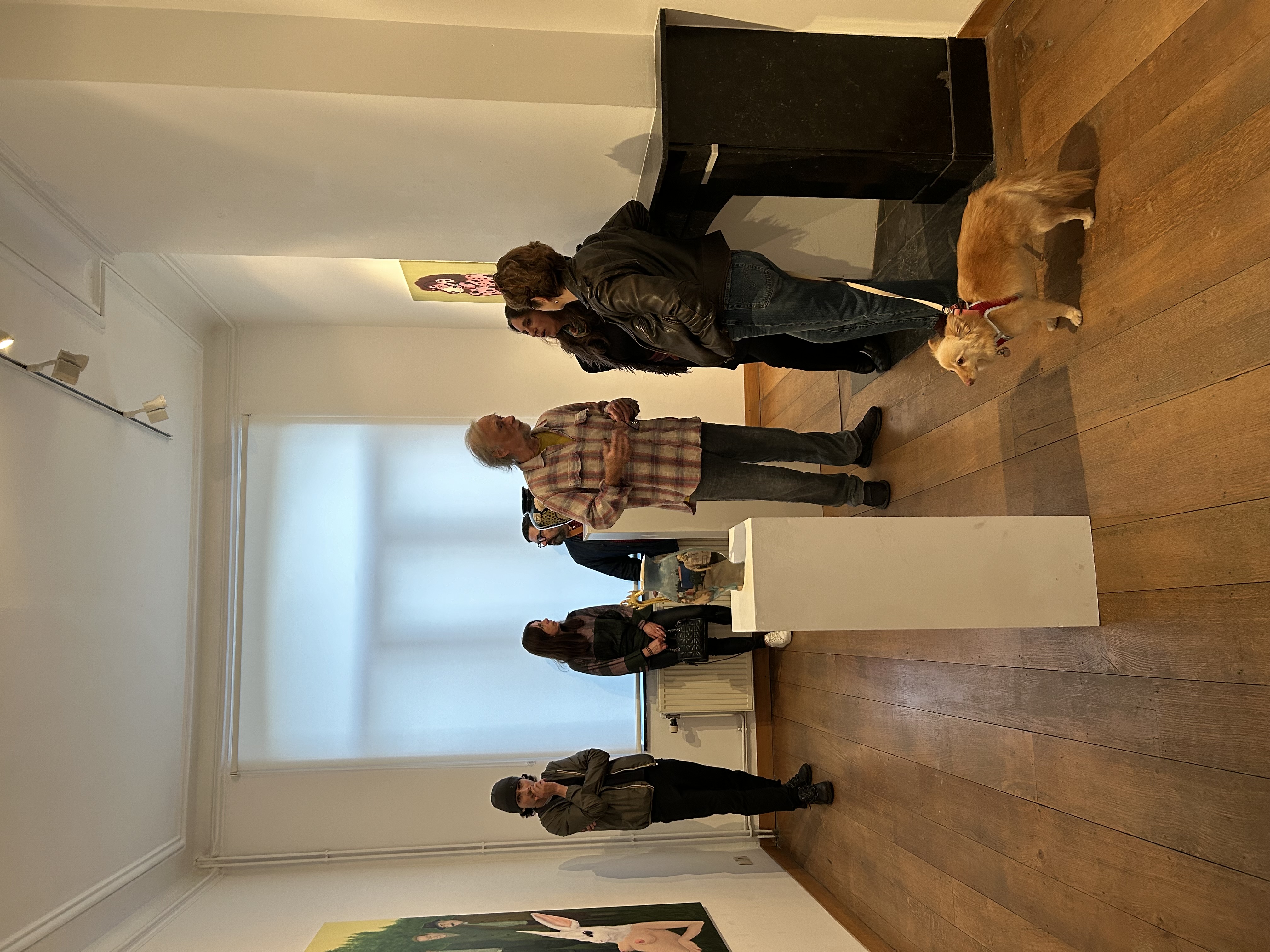
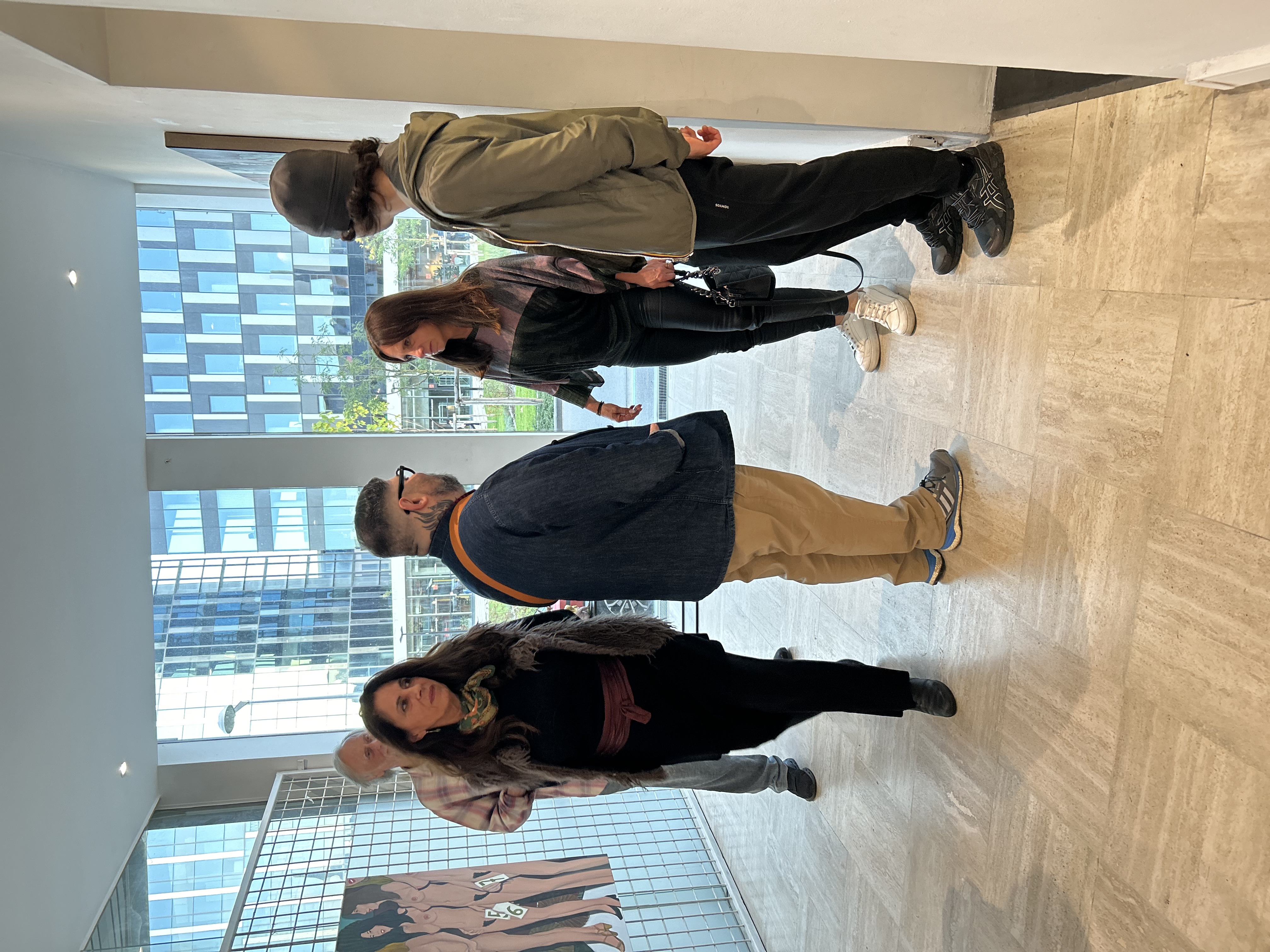
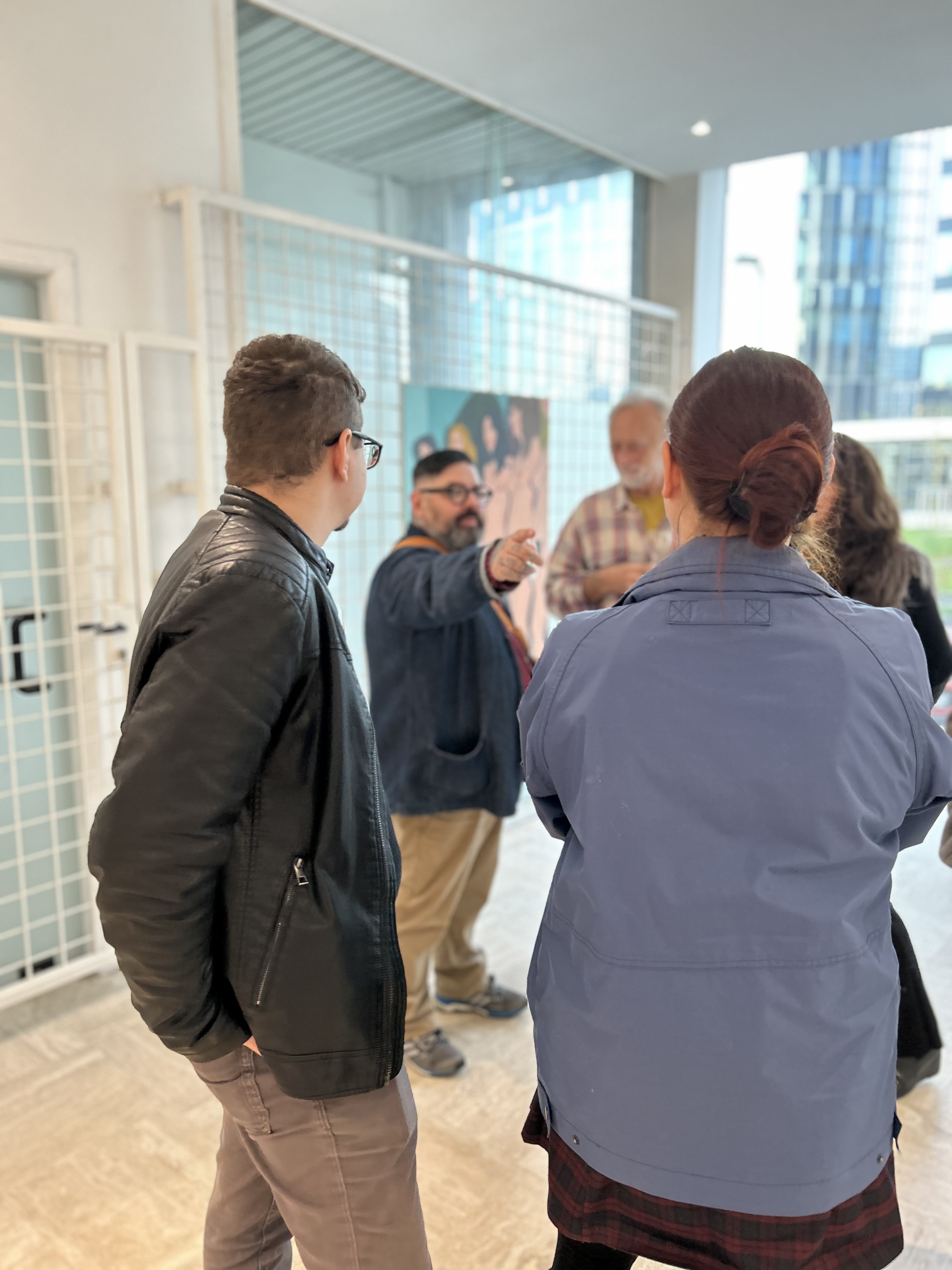
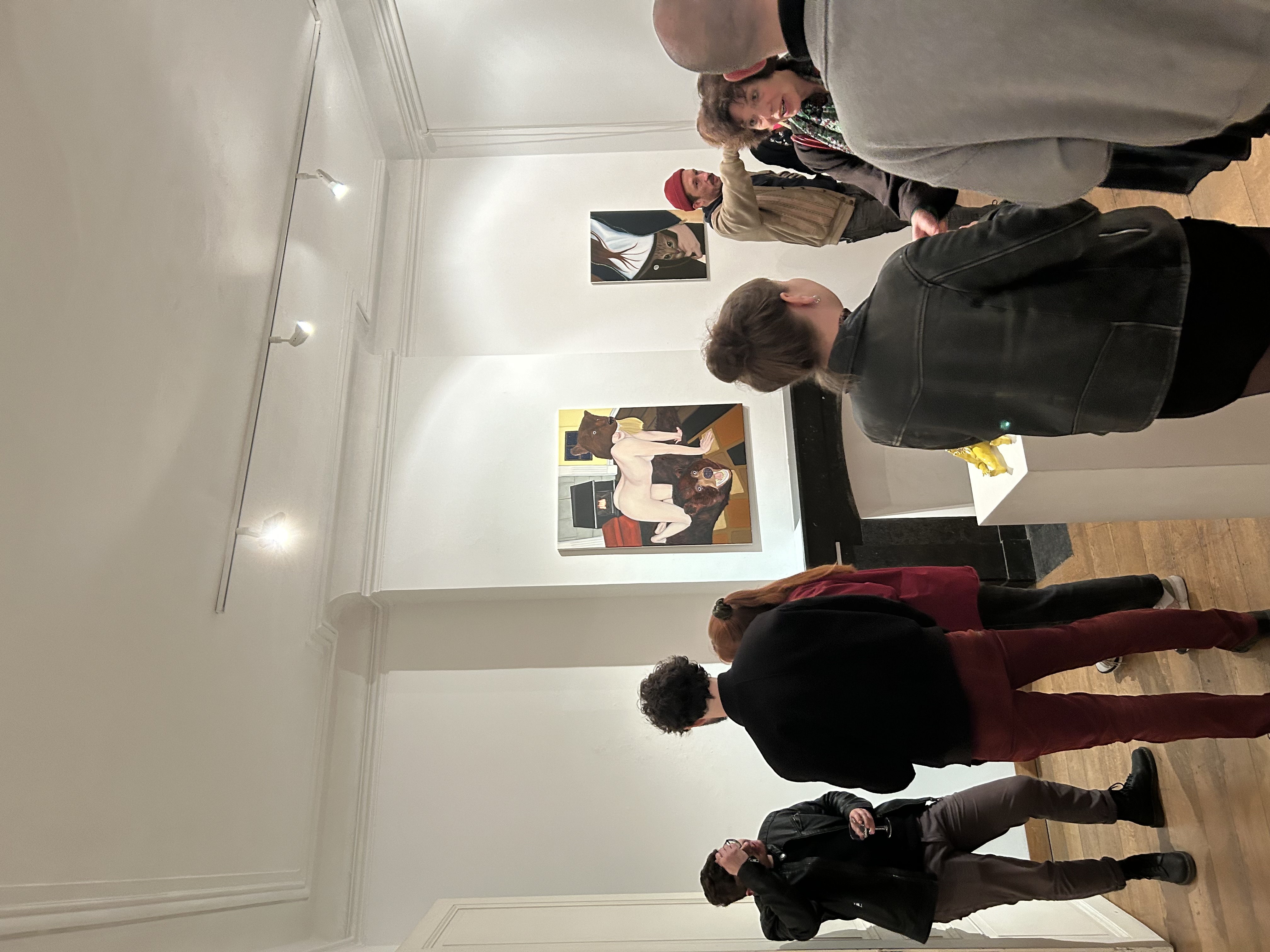
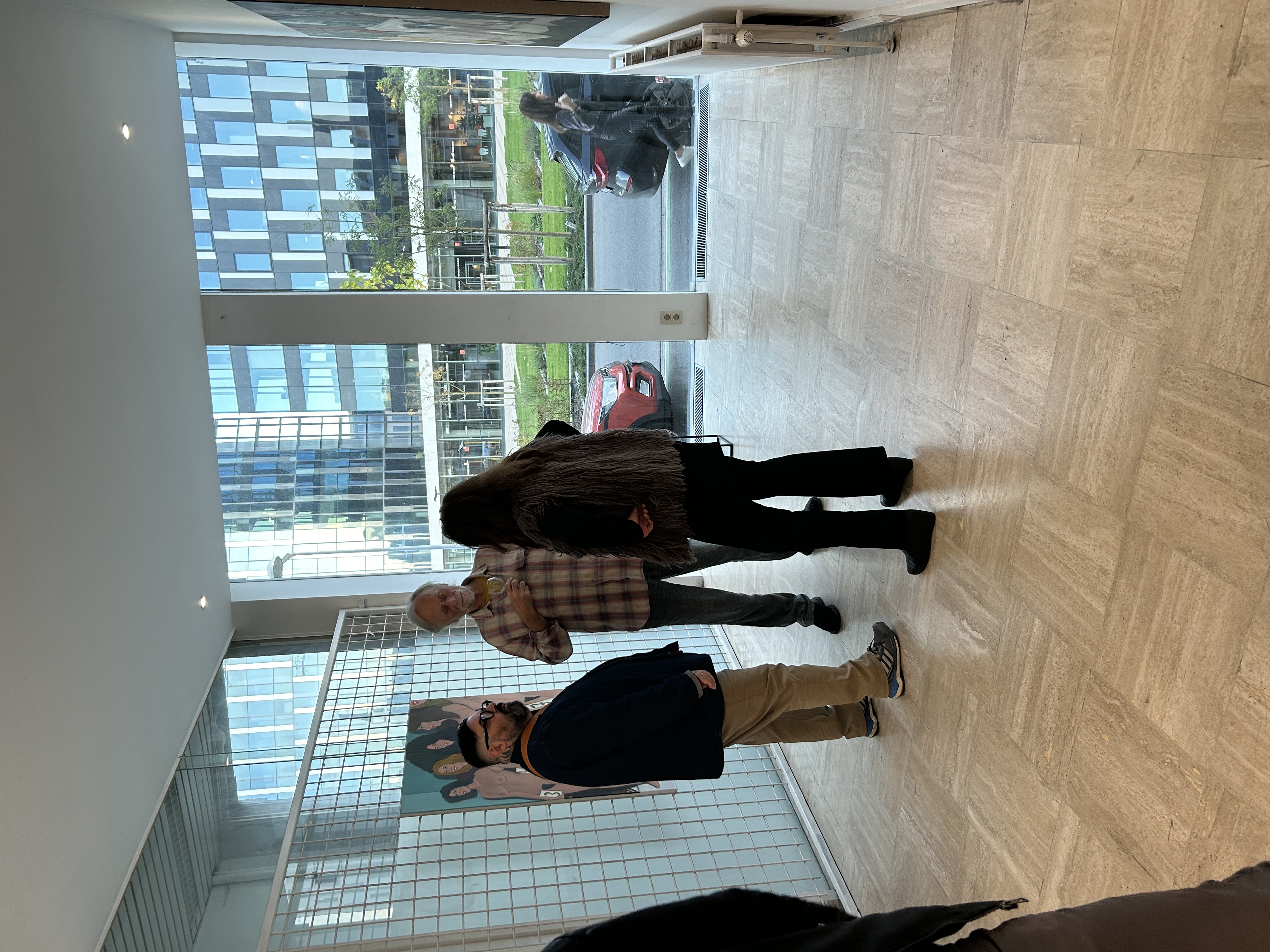
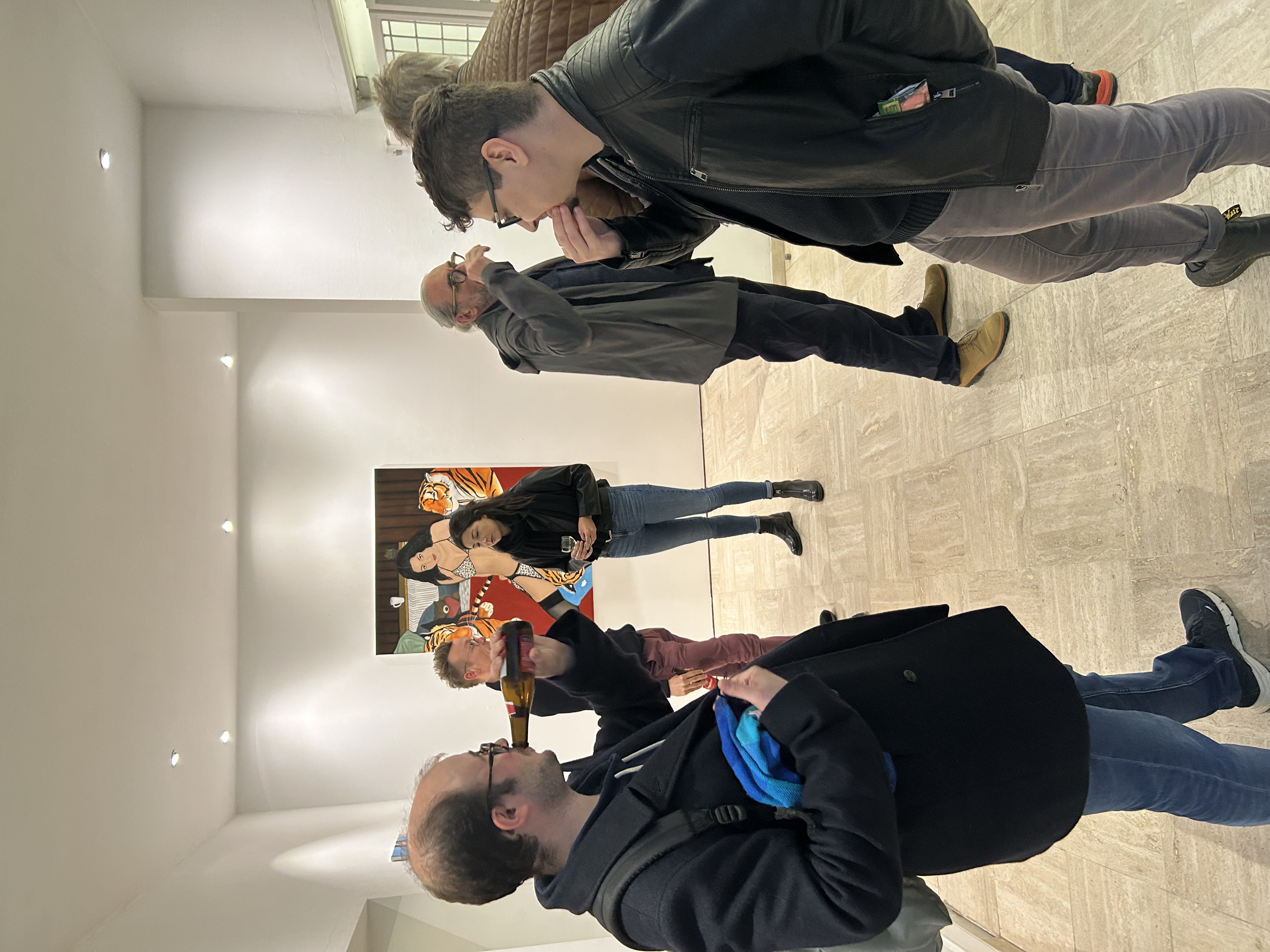
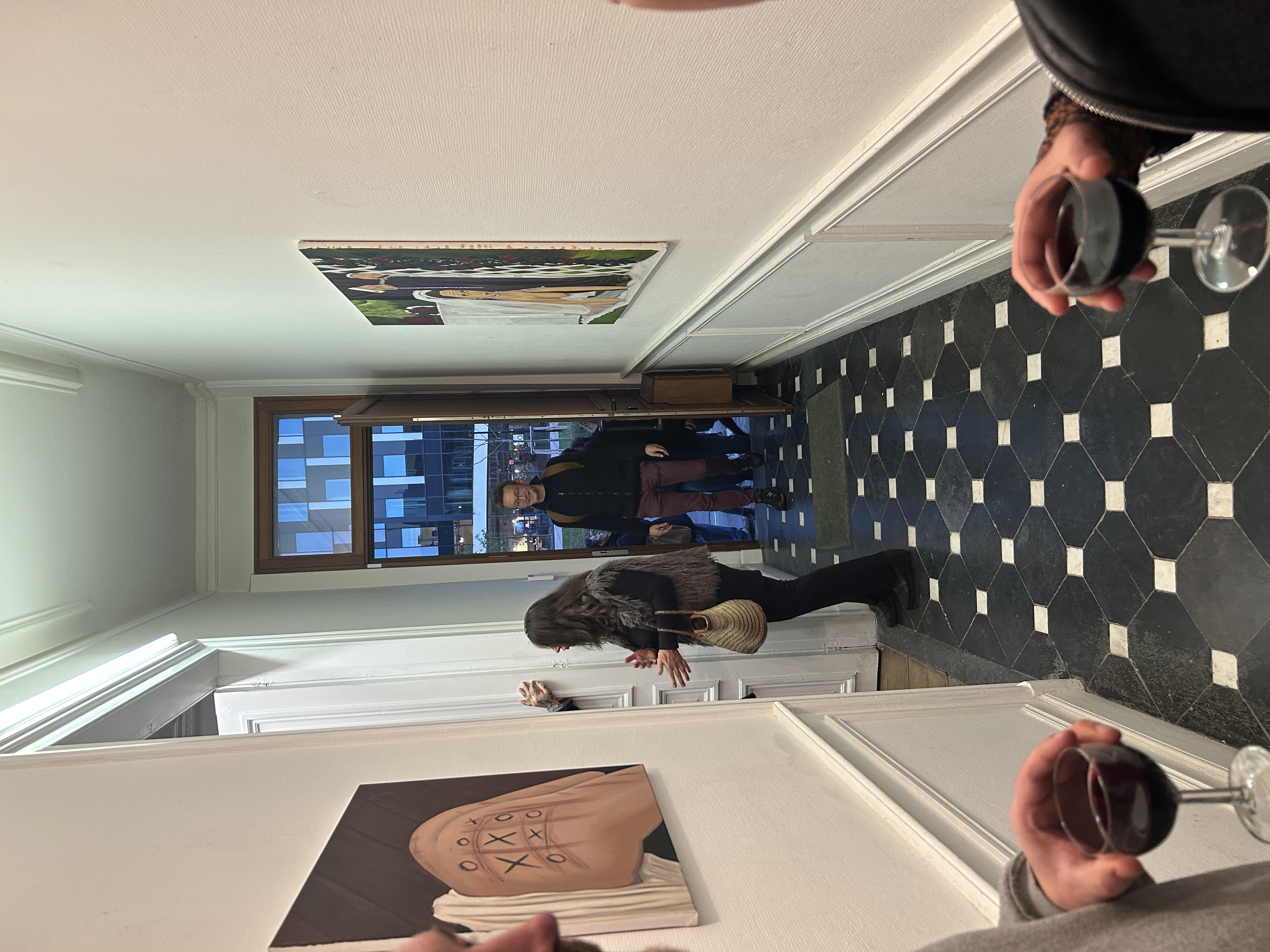
On opening night, one only had to listen to the visitors' comments, from the most charmed to the most boorish, their stifled laughter and loud exclamations, to understand that the exhibition hits the mark, with surgical precision, on our contemporary sensibilities. The artists' goal has thus been achieved, and everyone's gamble has paid off.
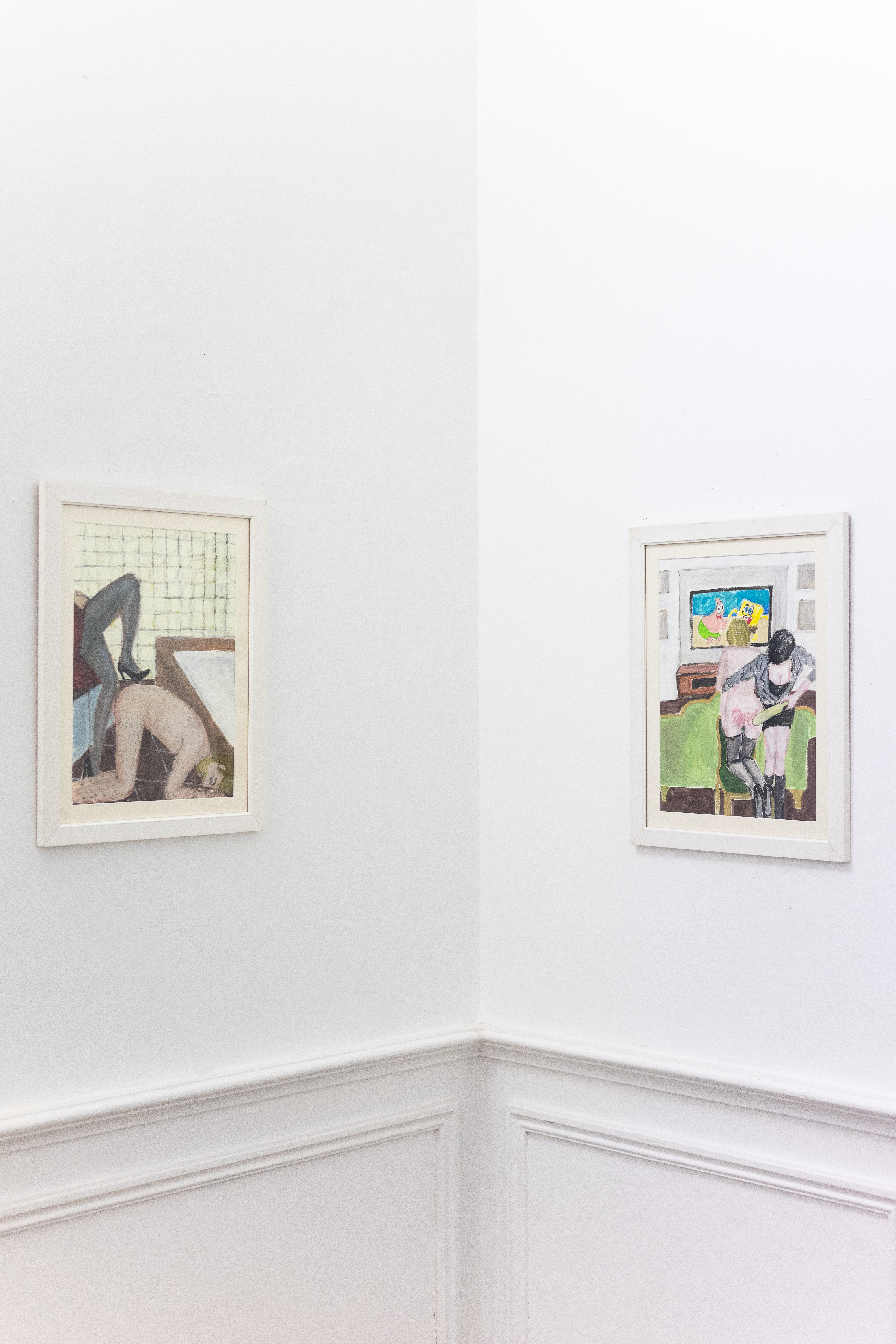
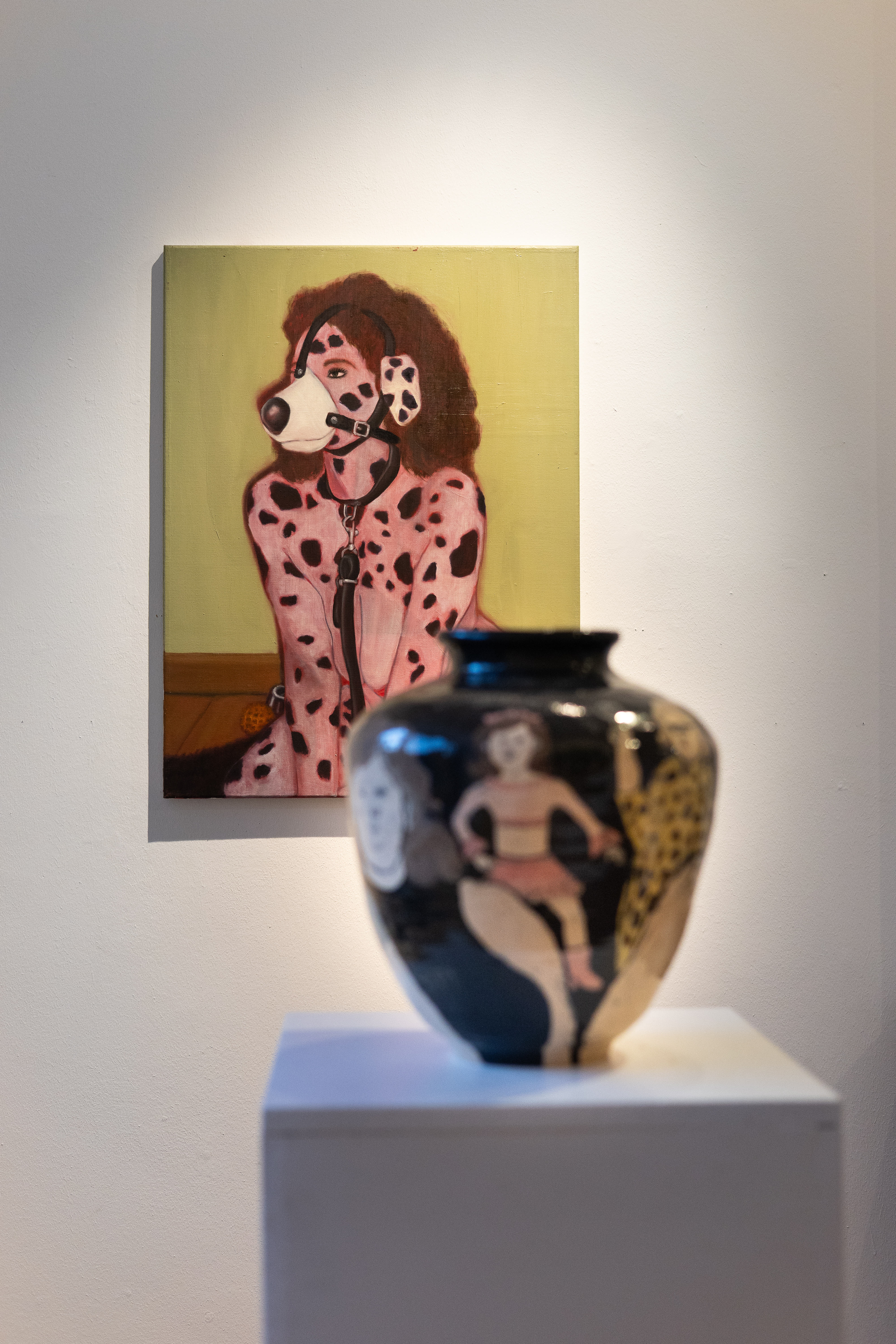
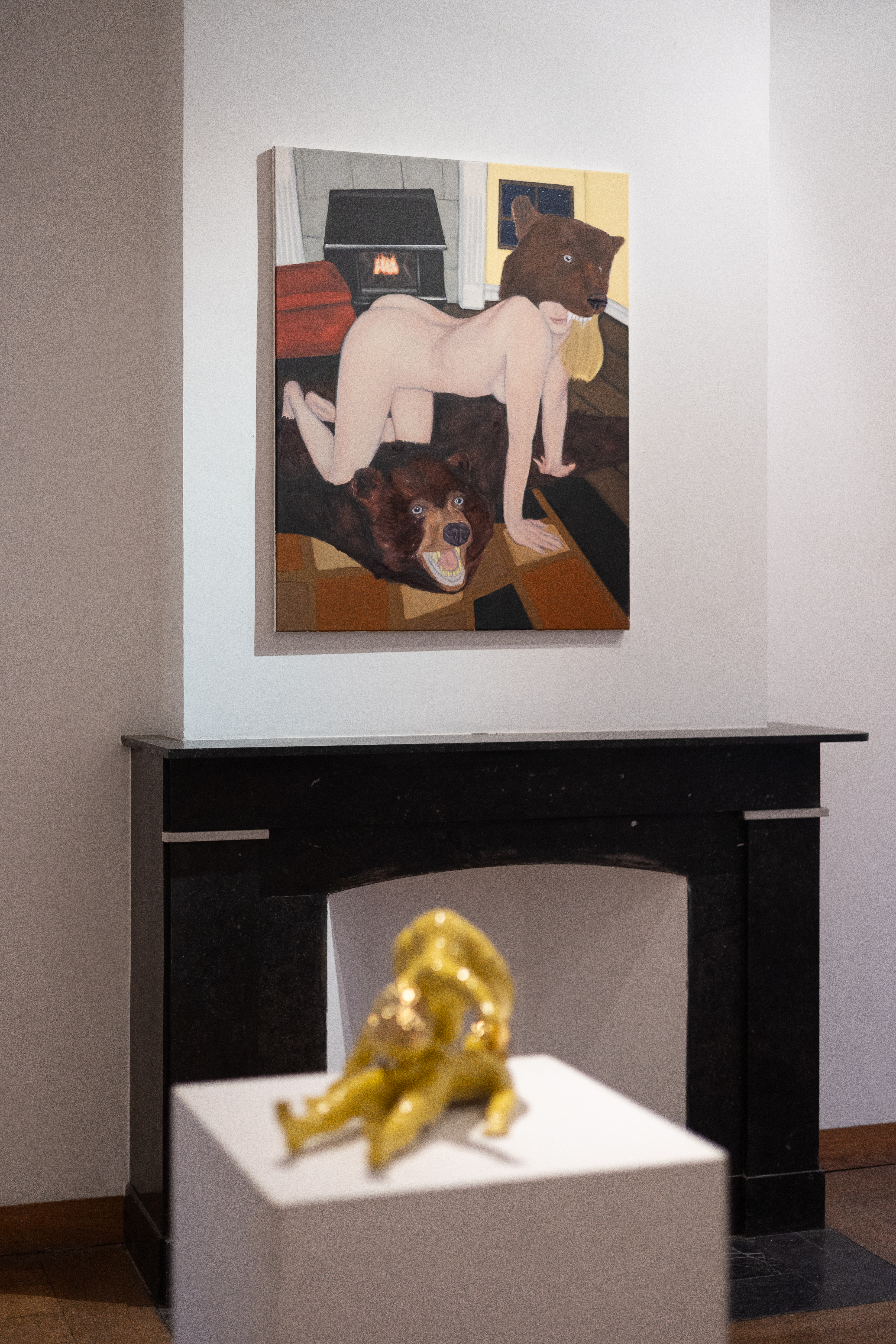
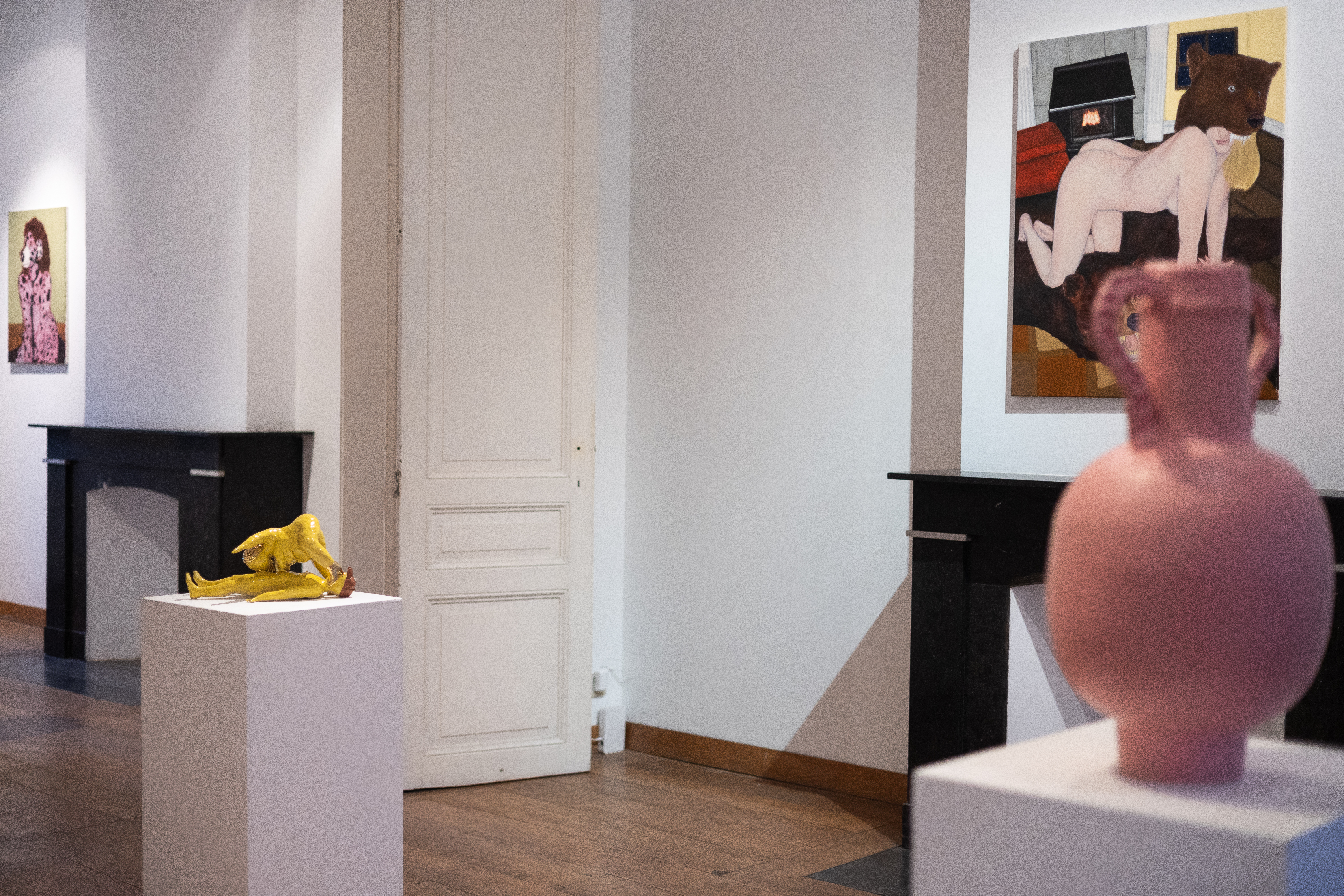
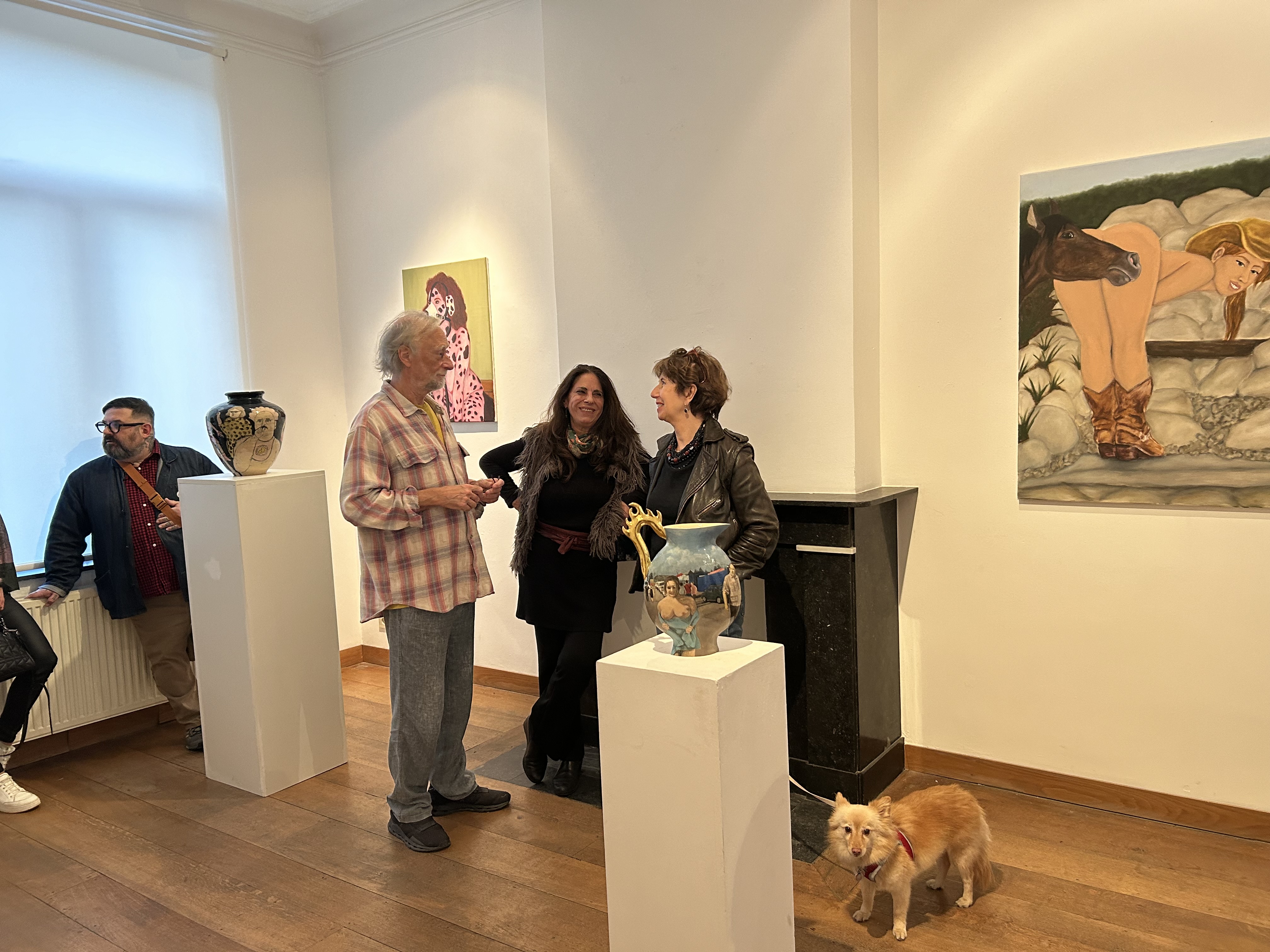
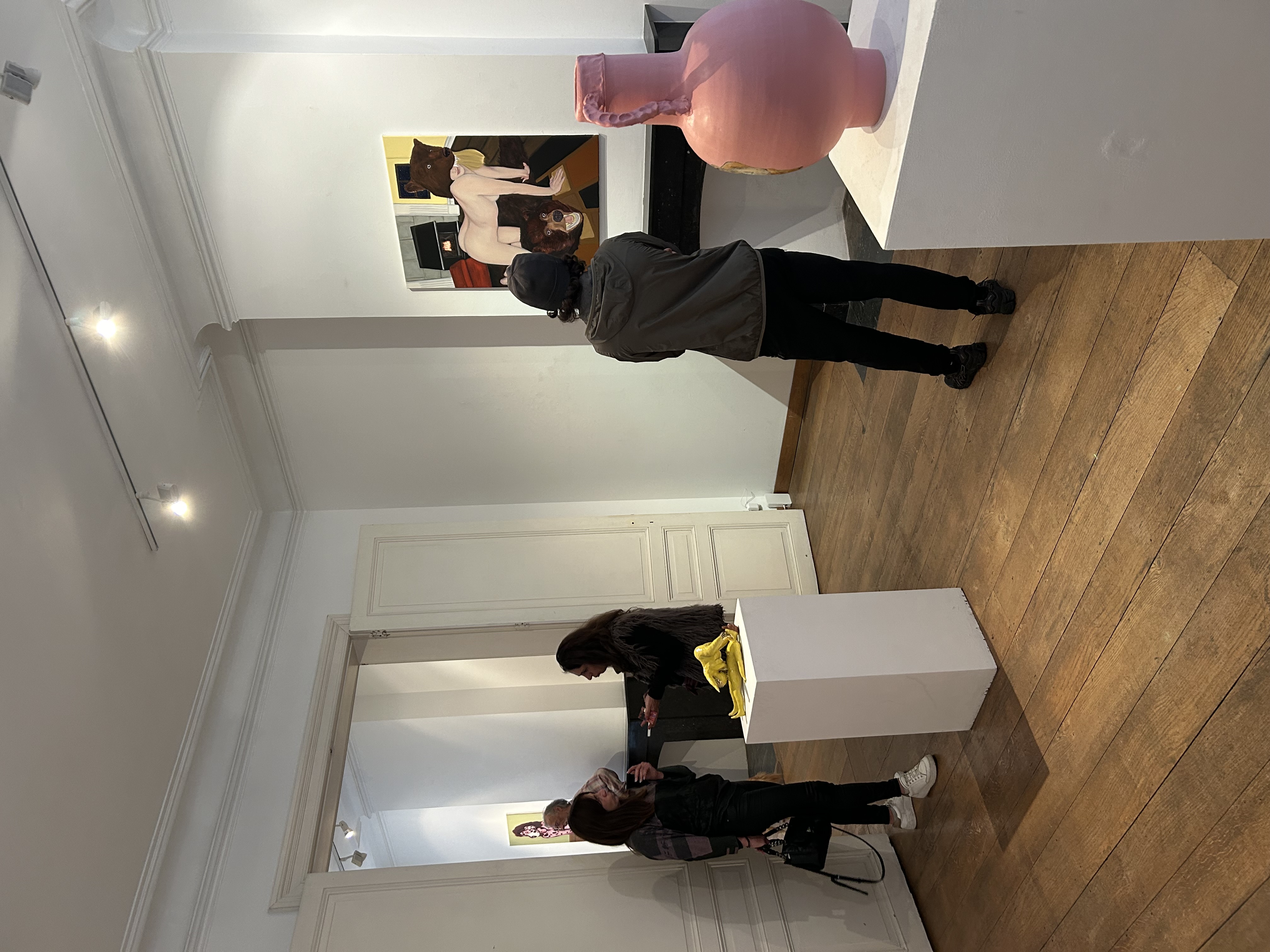
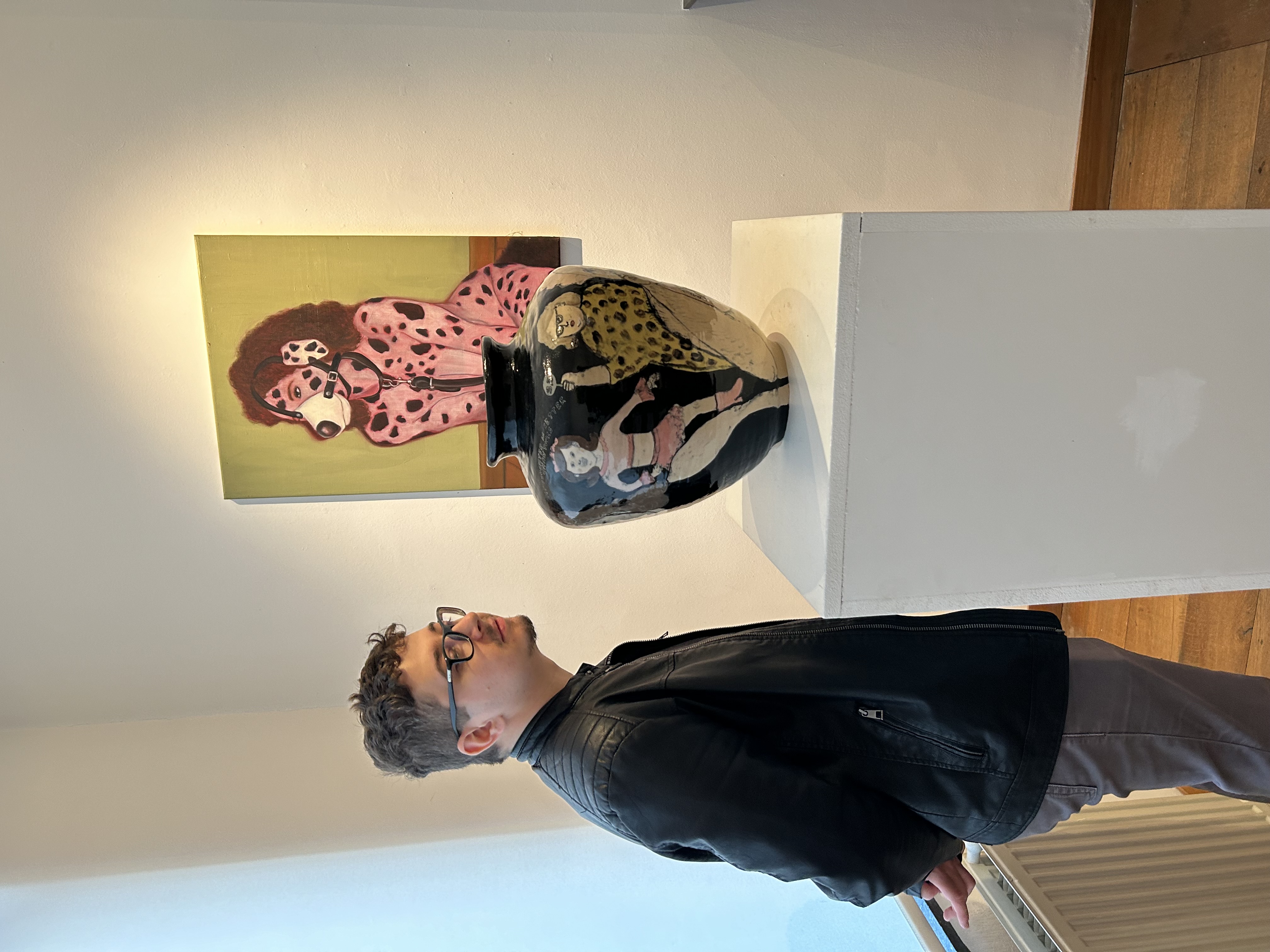
Zuzana Svatik's ceramics are cut from the same cloth, so to speak, as her colleague's paintings. Couples entangled in awkward lovemaking ("They fucked up the situation," she titles it) or unsettling motifs on everyday objects.
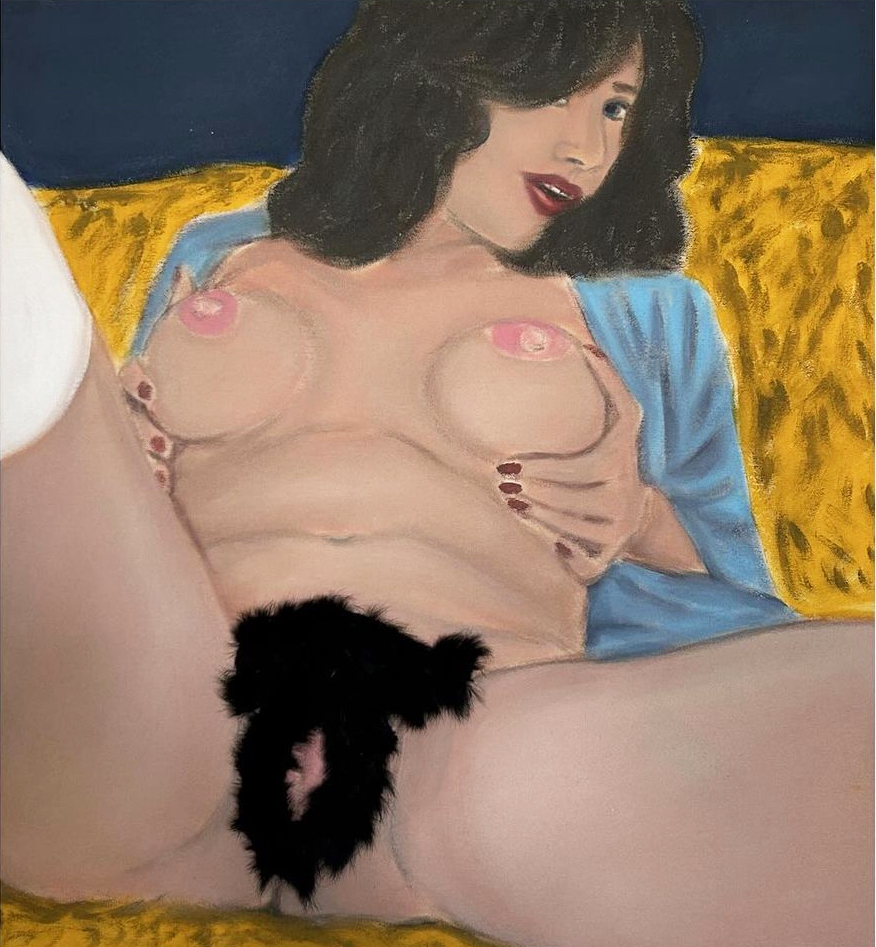
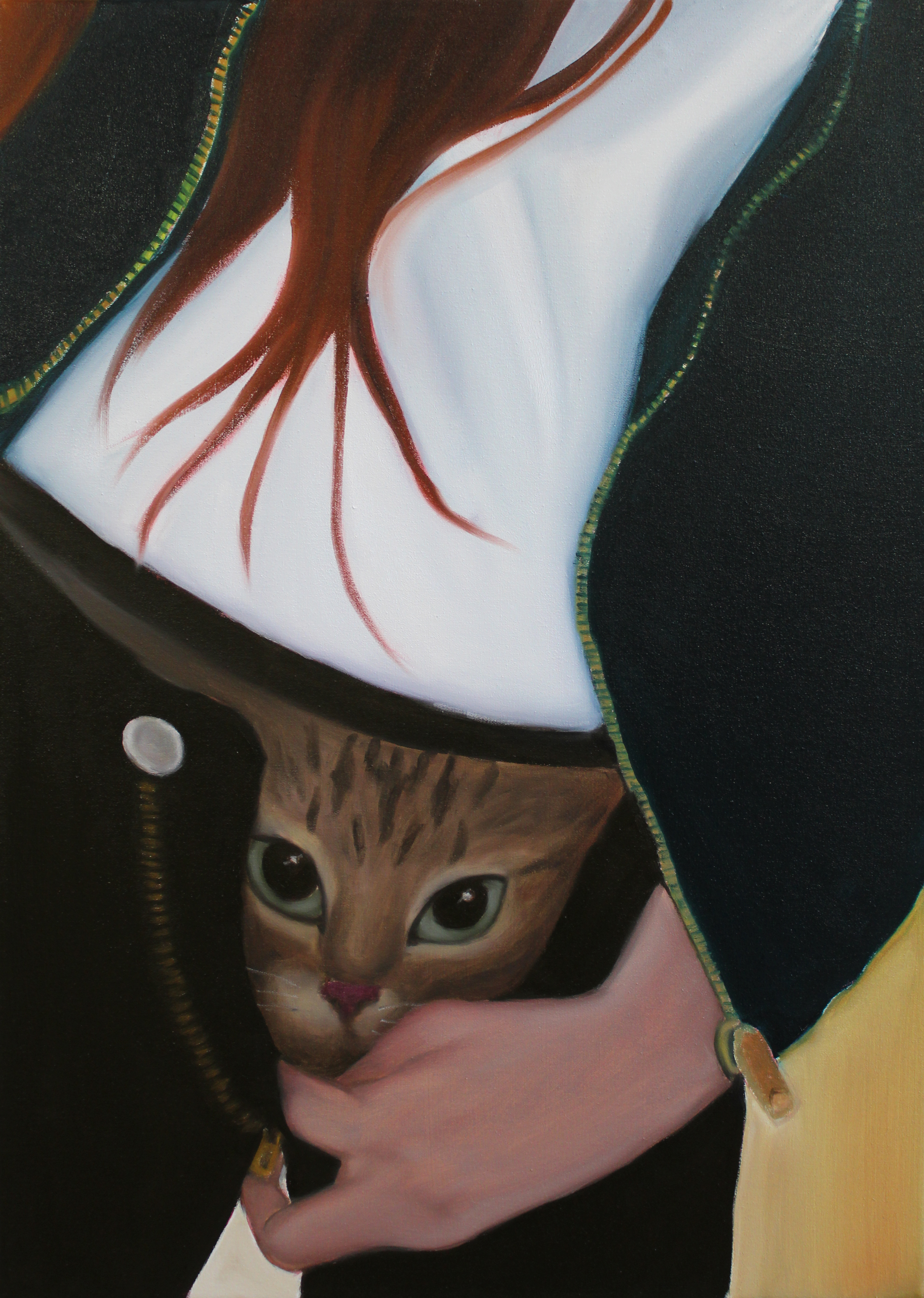
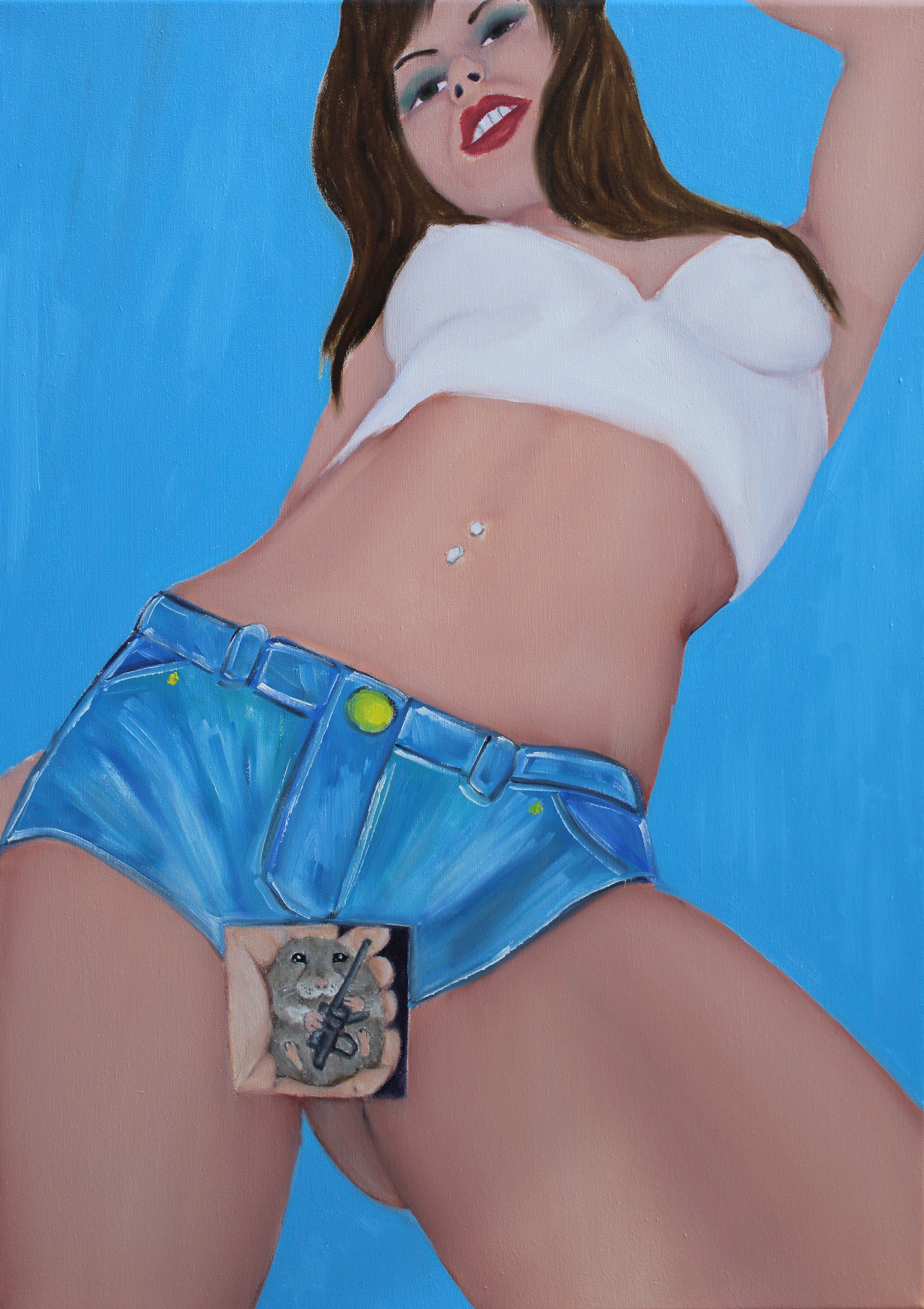
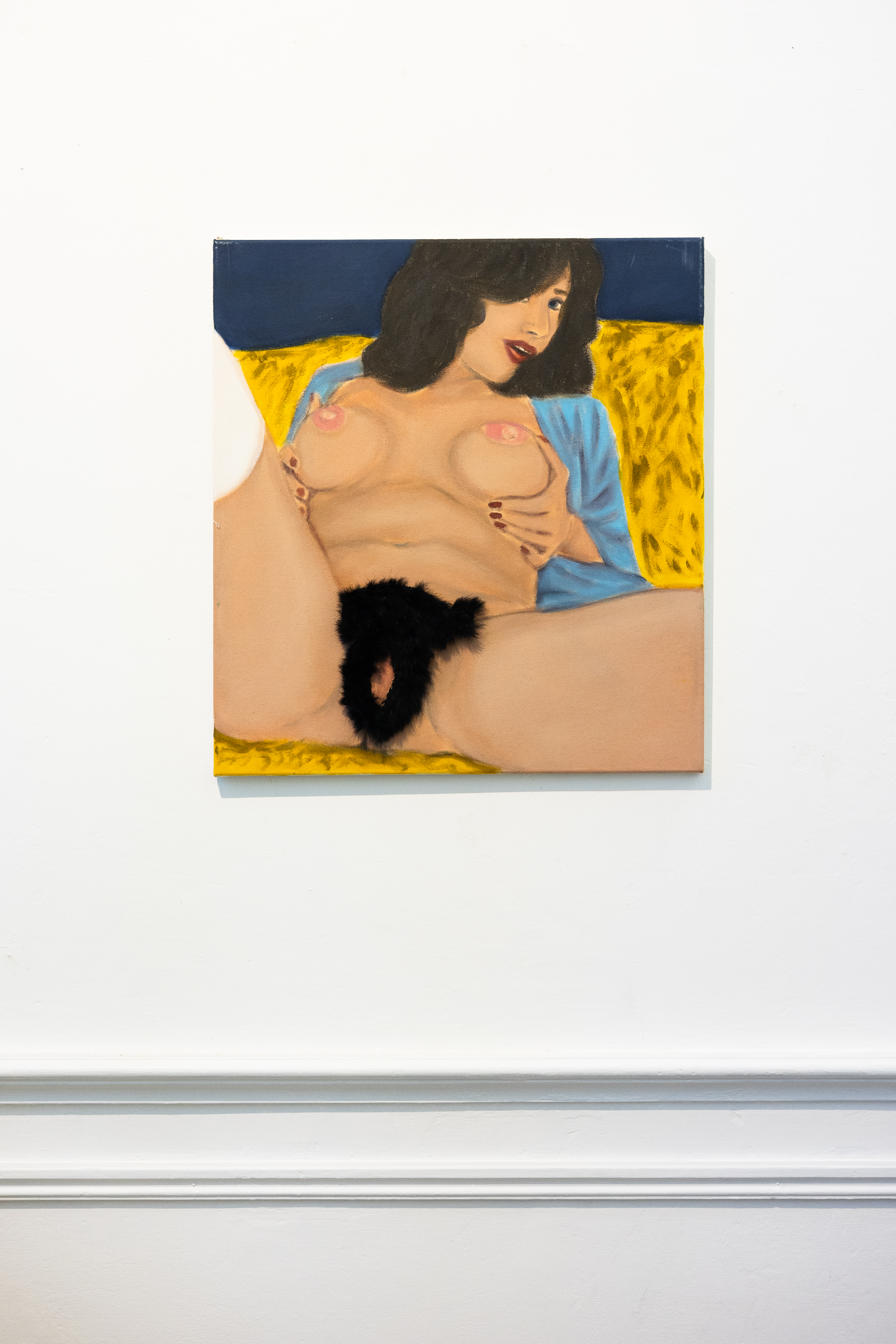
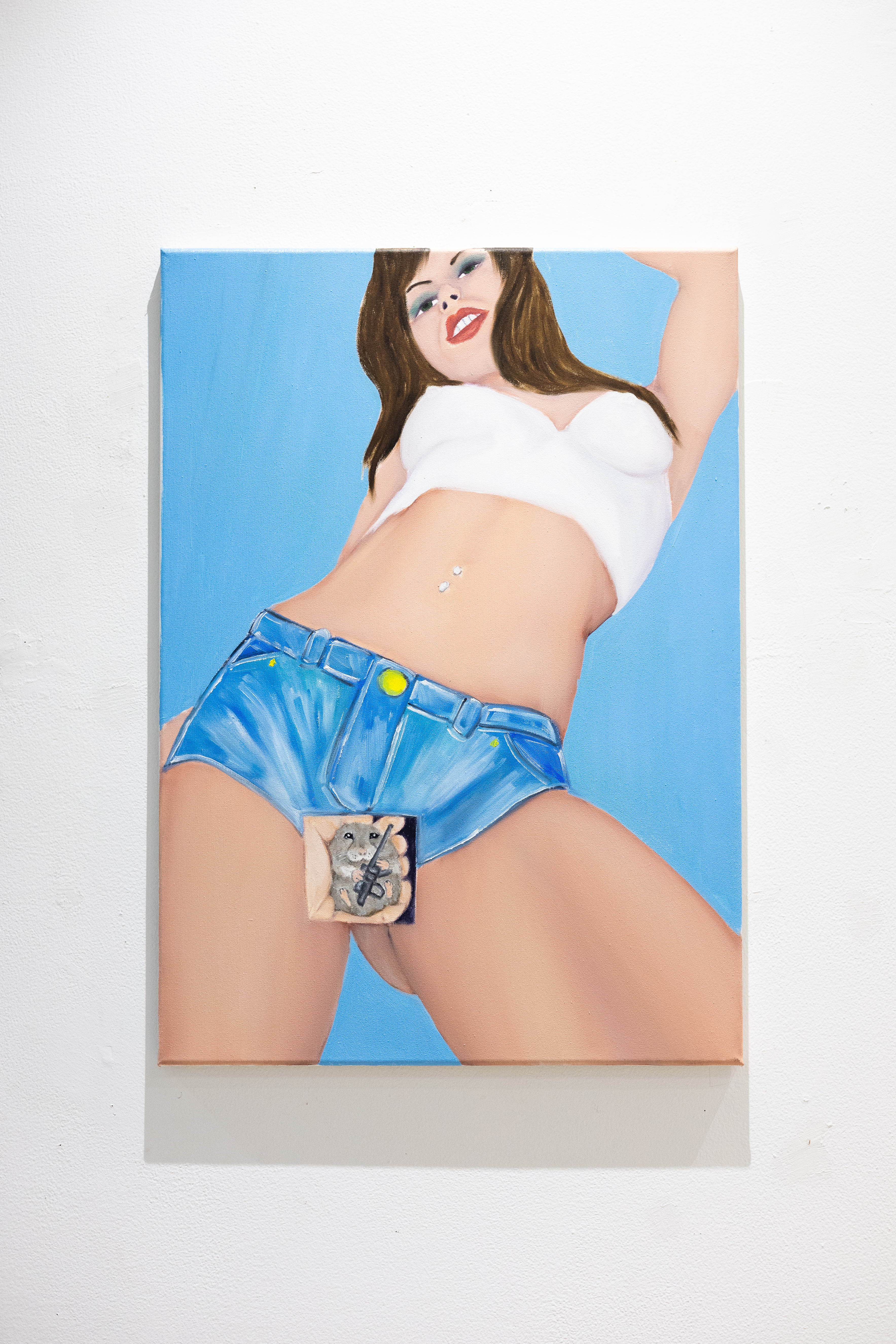
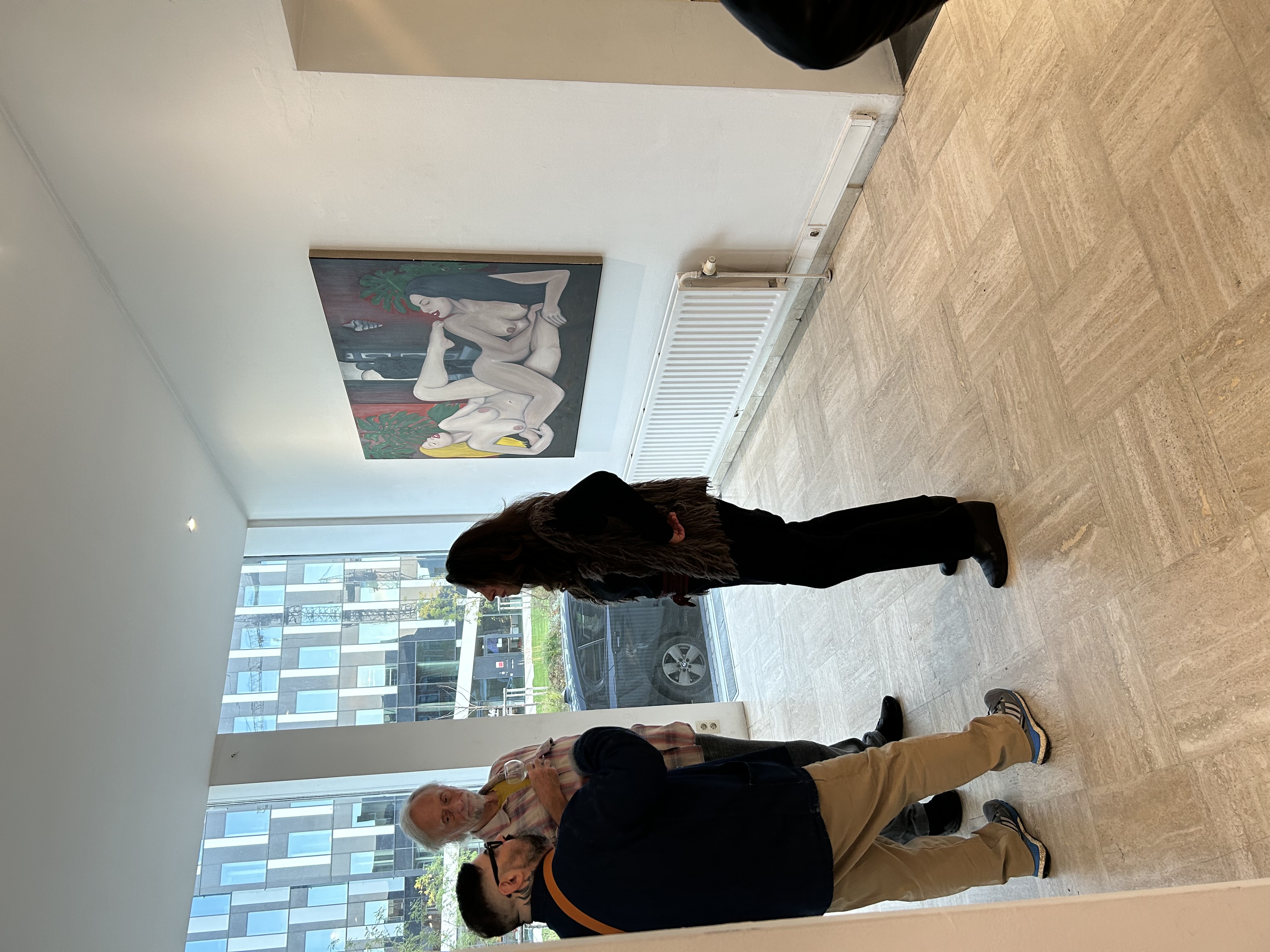
At the turn of a corner, past an elegant vase adorned with saccharine sweetness, one stumbles upon a pornographic scene. Just like on the internet. Where these images coexist seamlessly during our endless scrolling, without us being particularly bothered. Where the commodification of the "cute" kitten and of female objectified bodies staged obscenely are indifferently thrown to our thumbs-up in the arena of “clickbait".
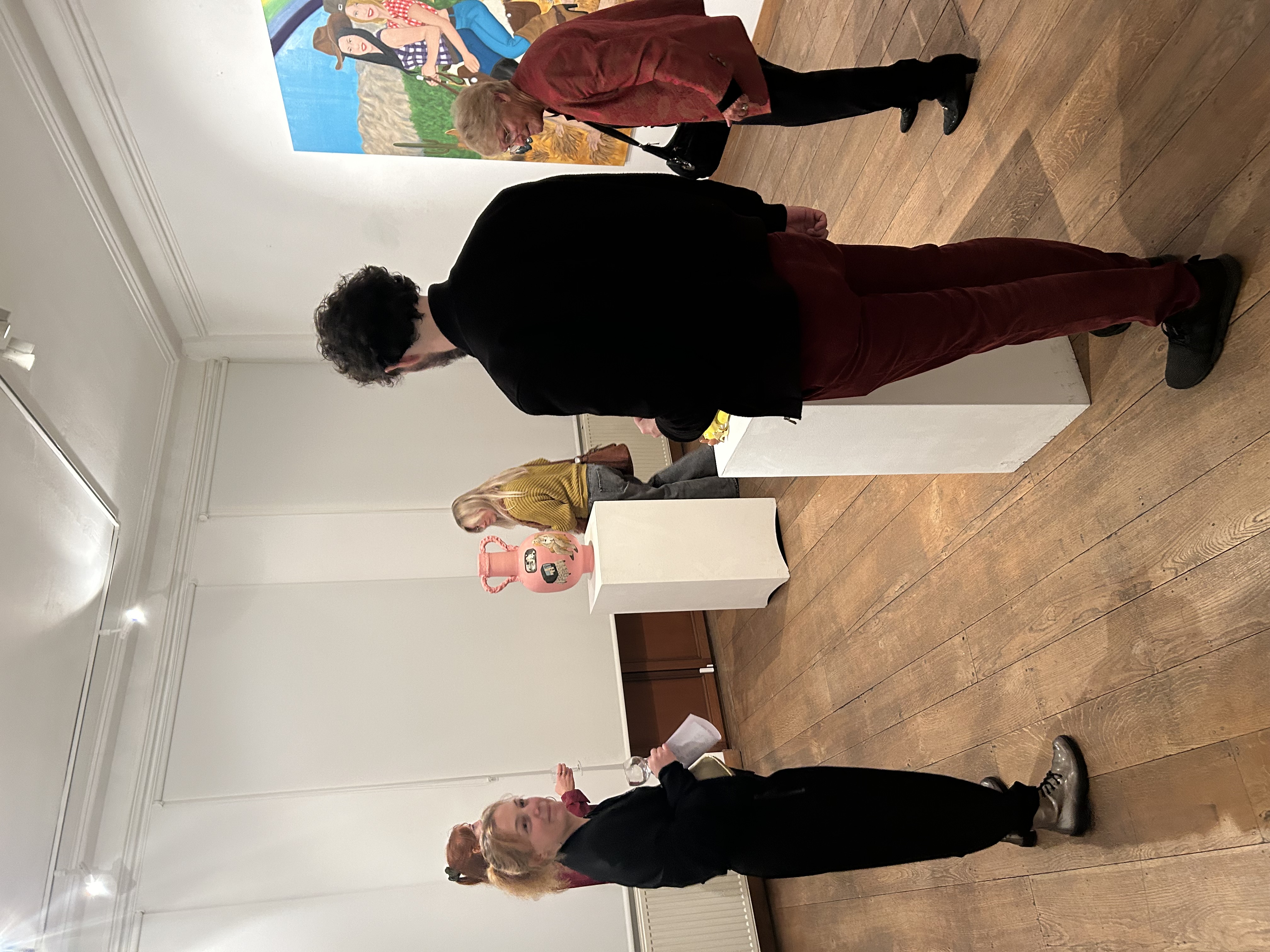
And what about that pink amphora, which, like voyeurs, draws us into the living room of a man busy with his penis in his hand, in front of a screen where a couple is copulating…?
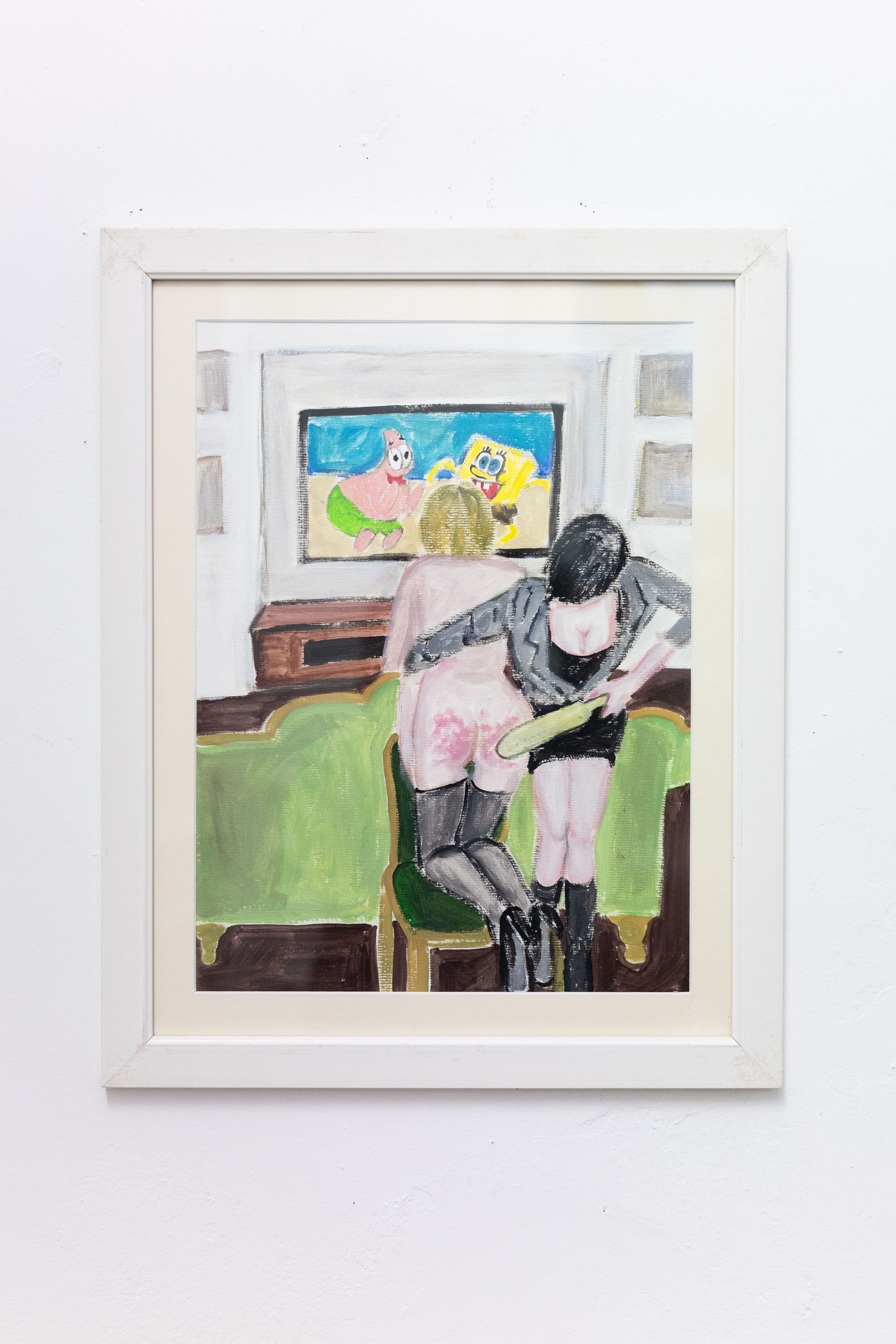
The killer detail, as found in each of the works in this exhibition, is the Virgin and her son, enthroned in a high frame, unwittingly completing this domestic Trinity.
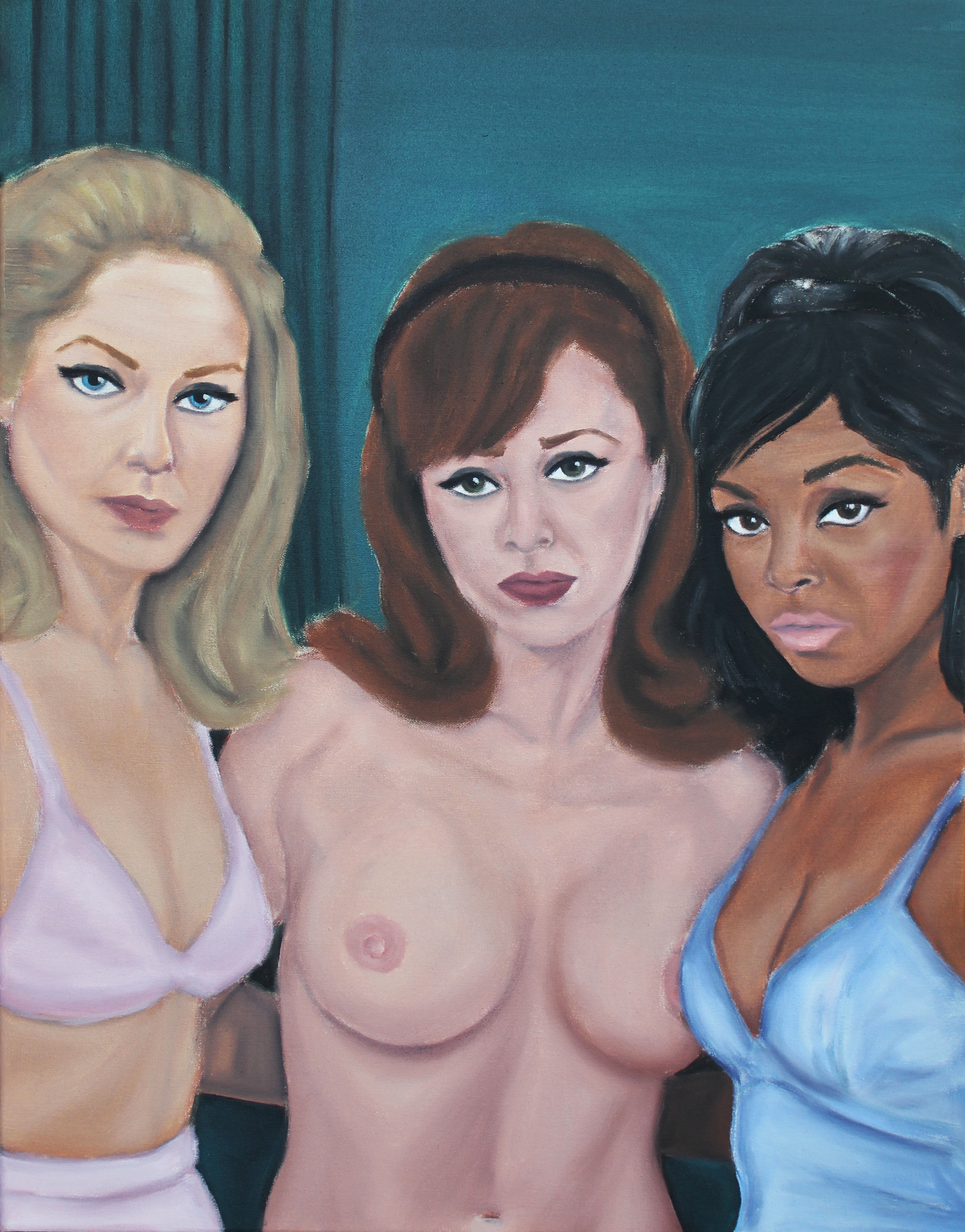
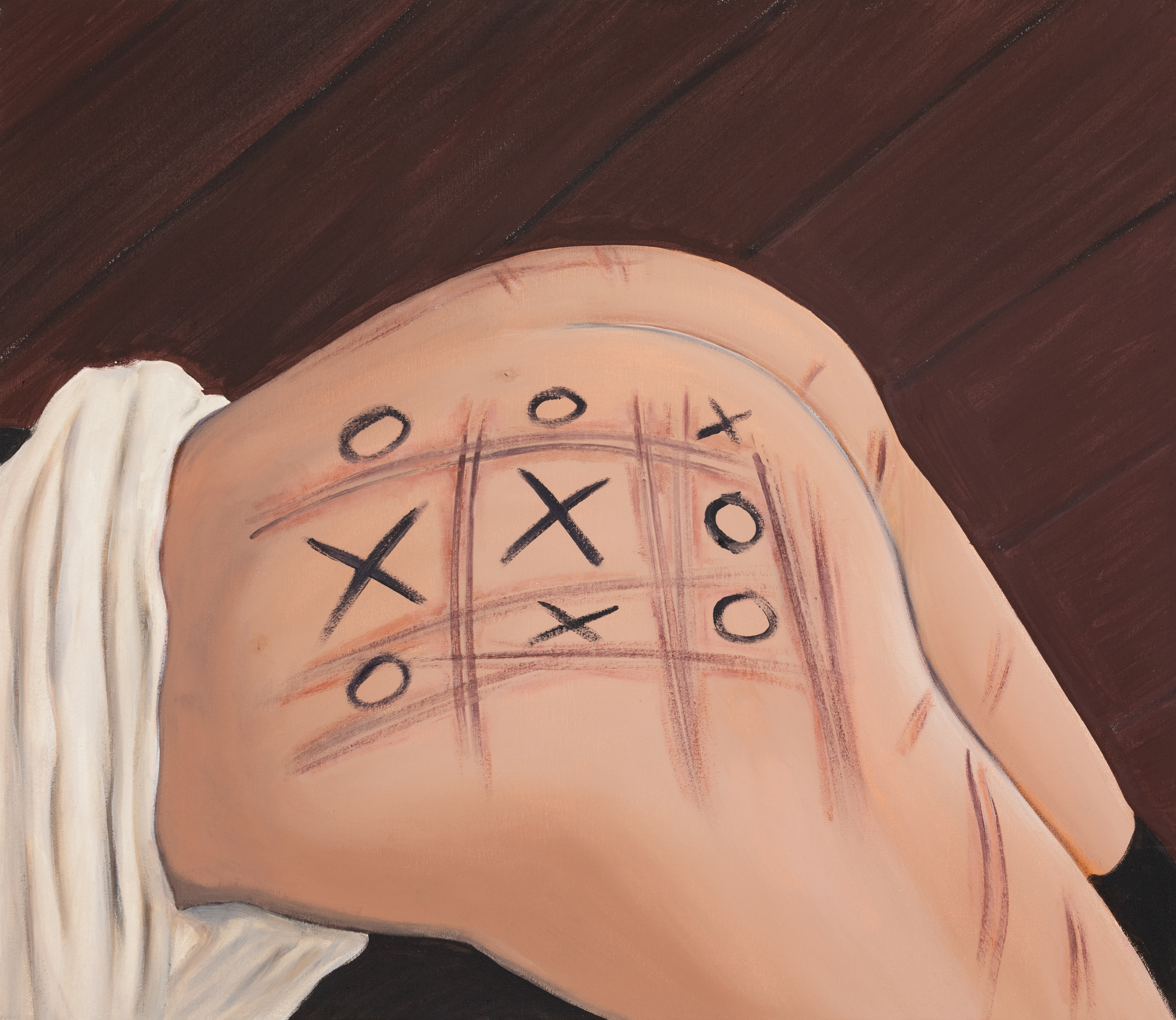
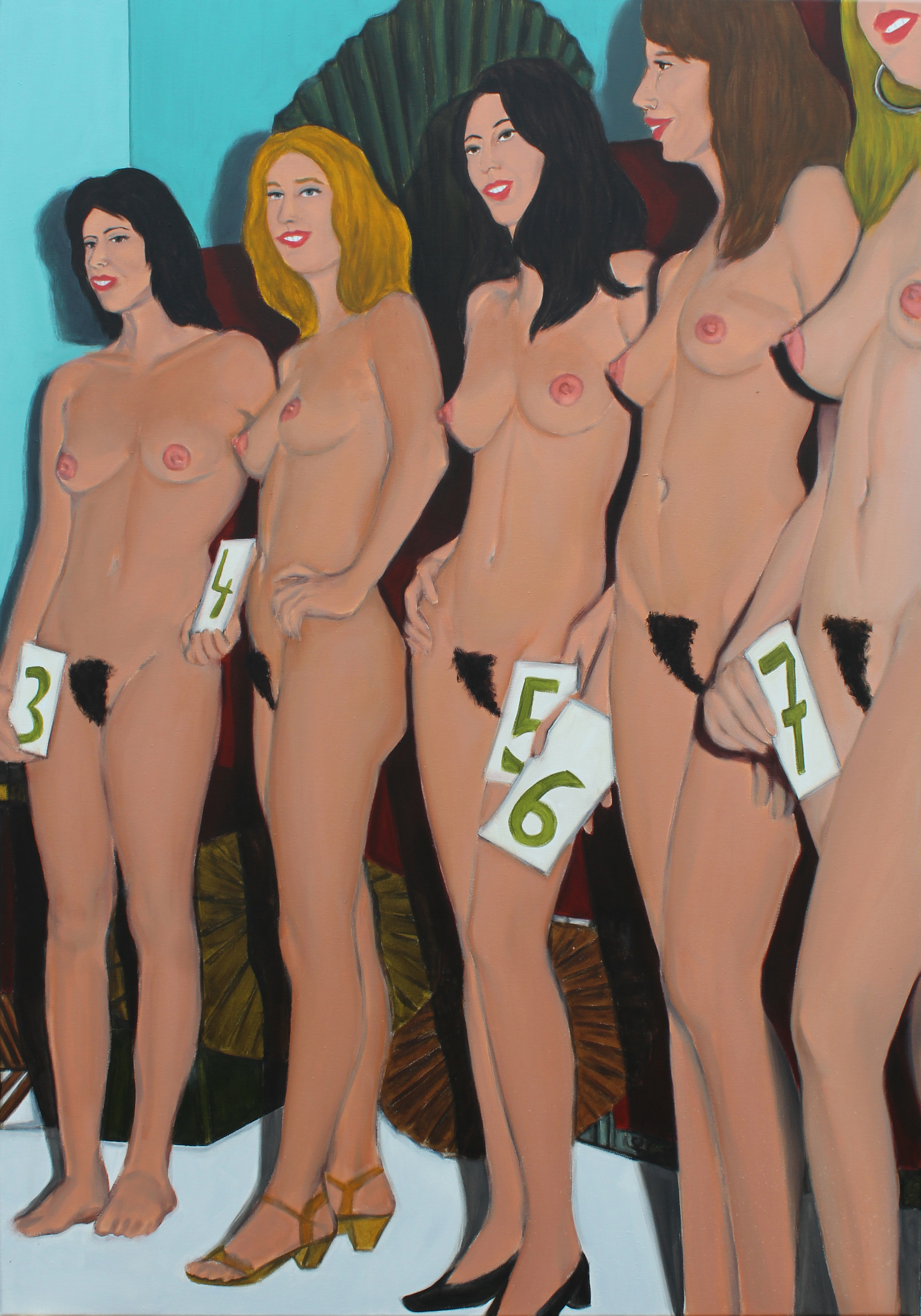
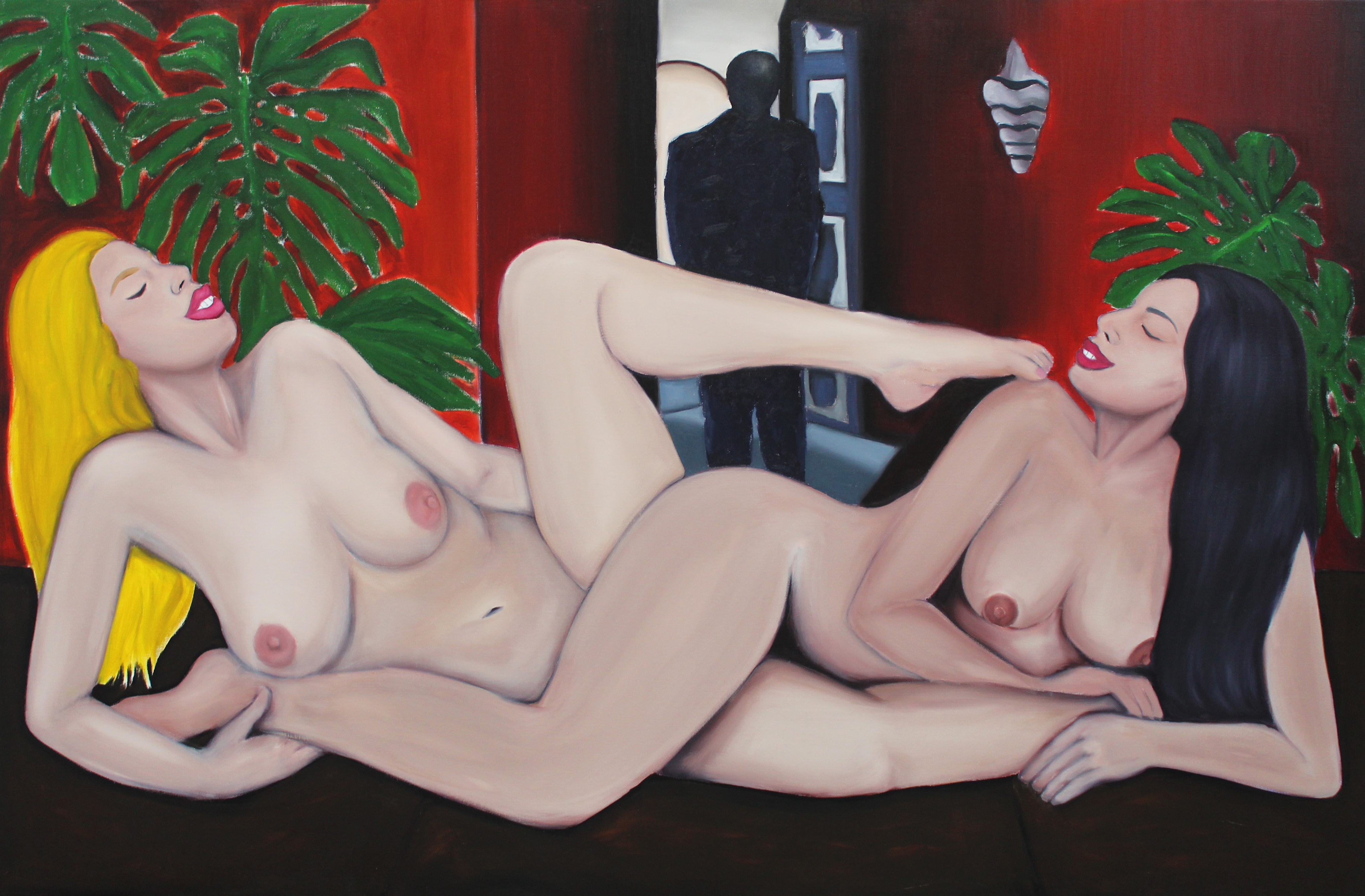
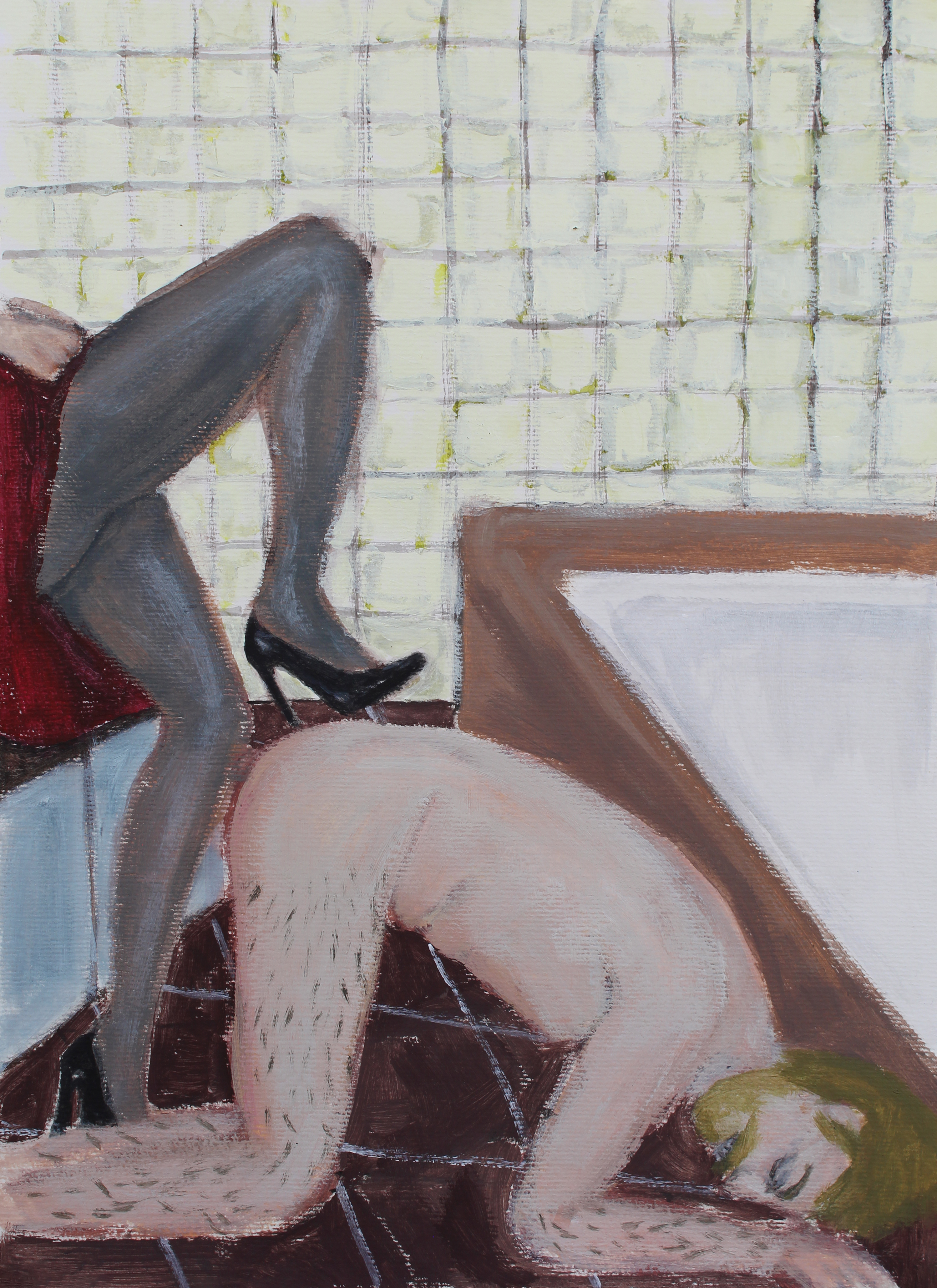
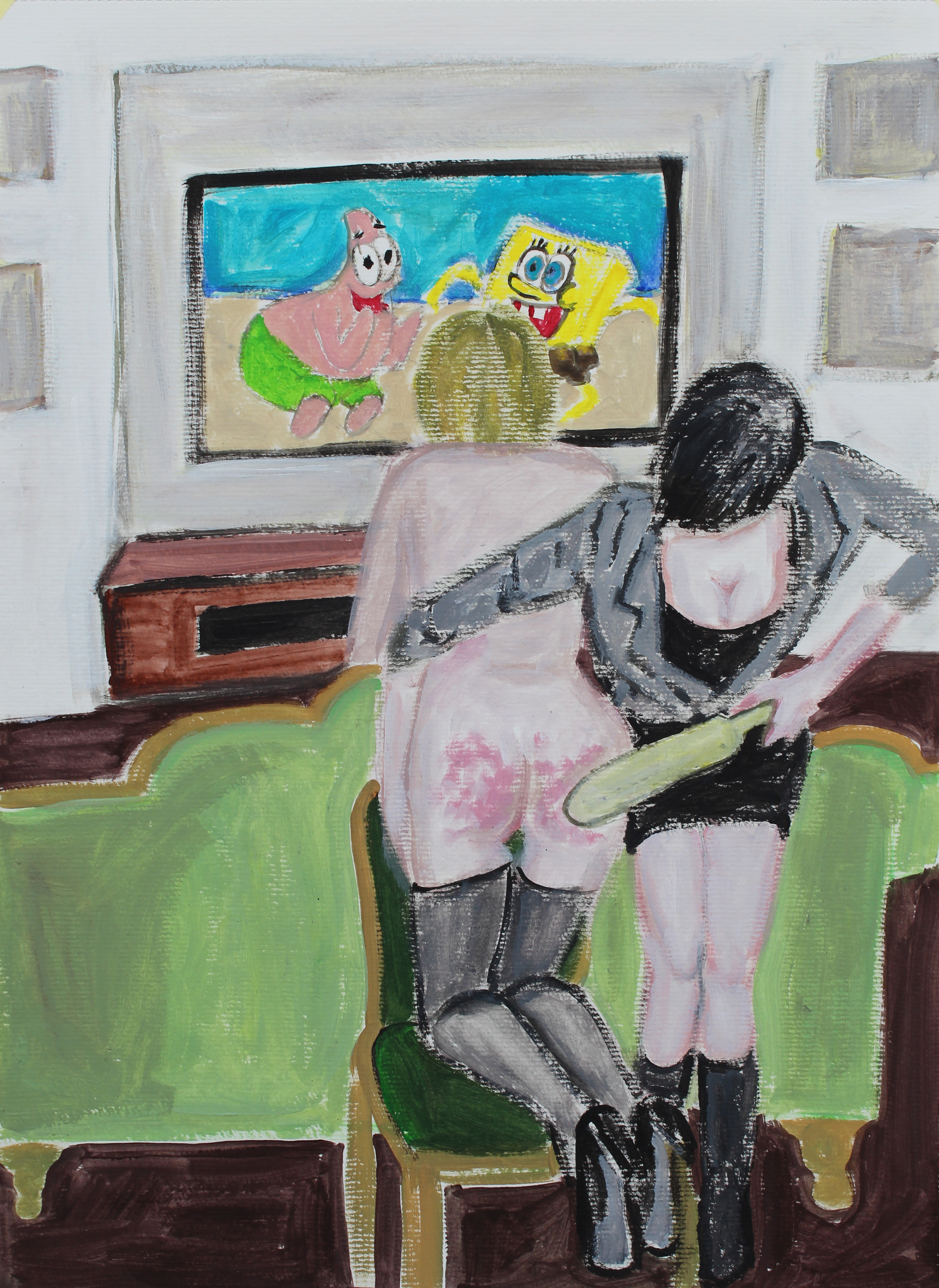
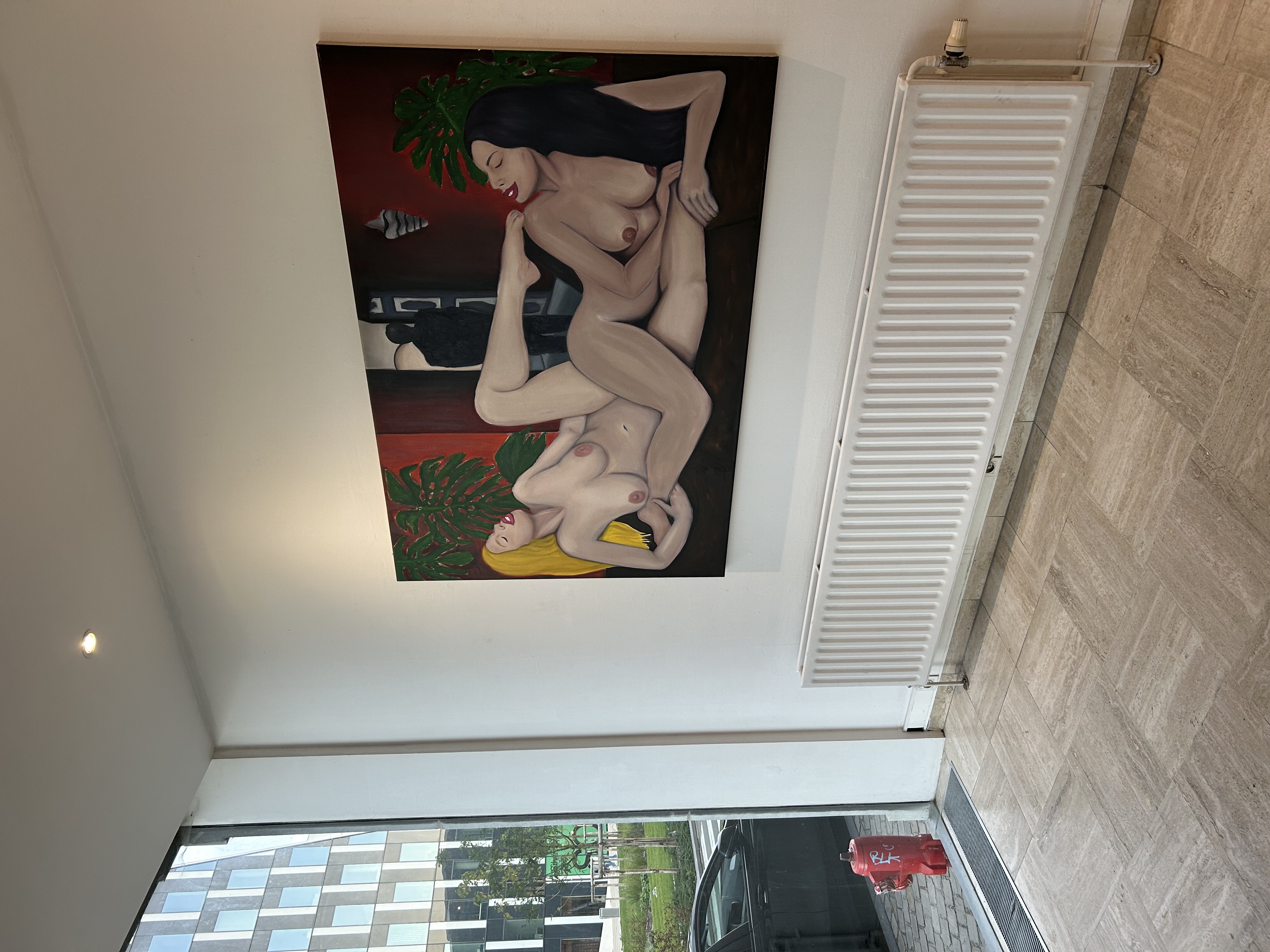
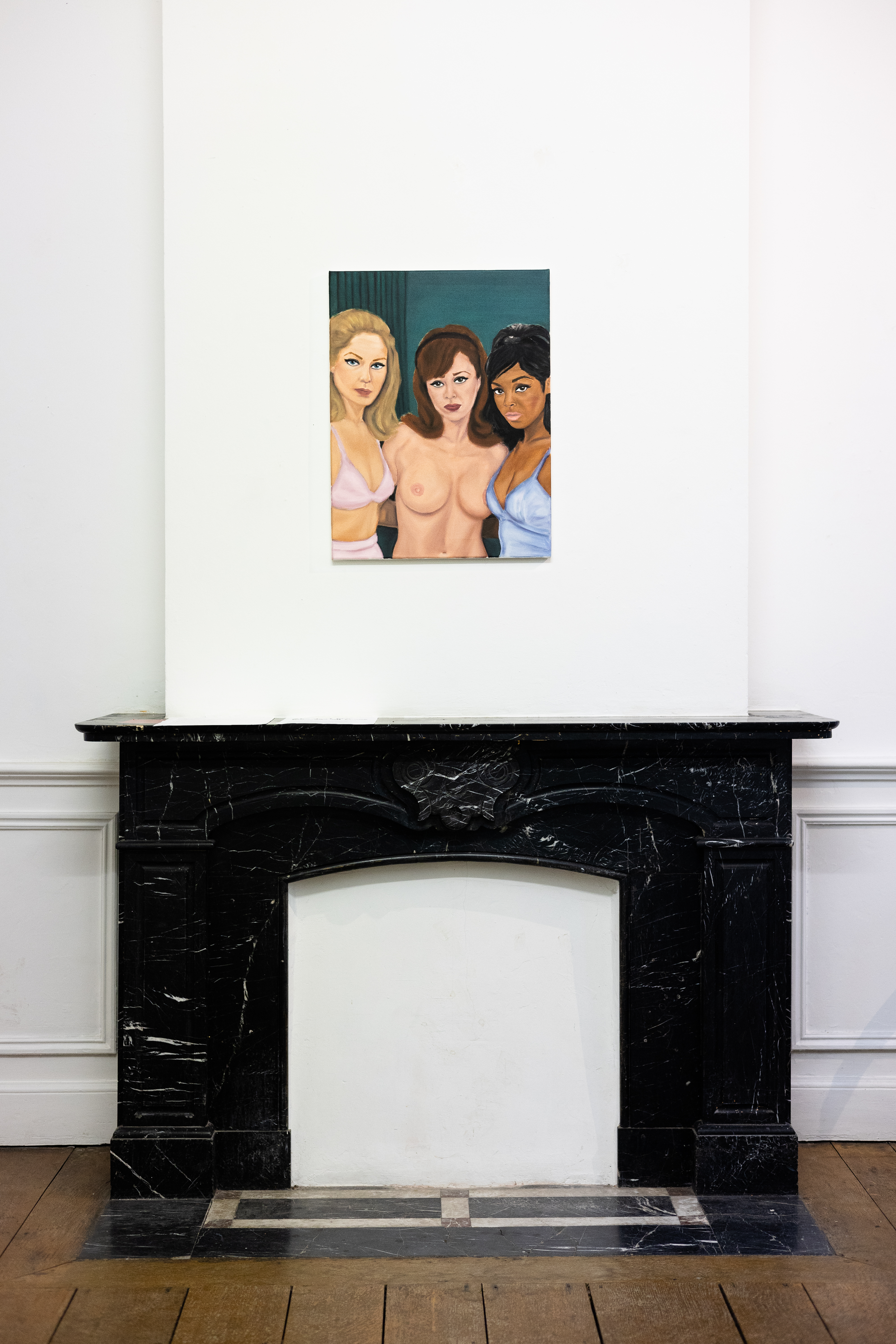
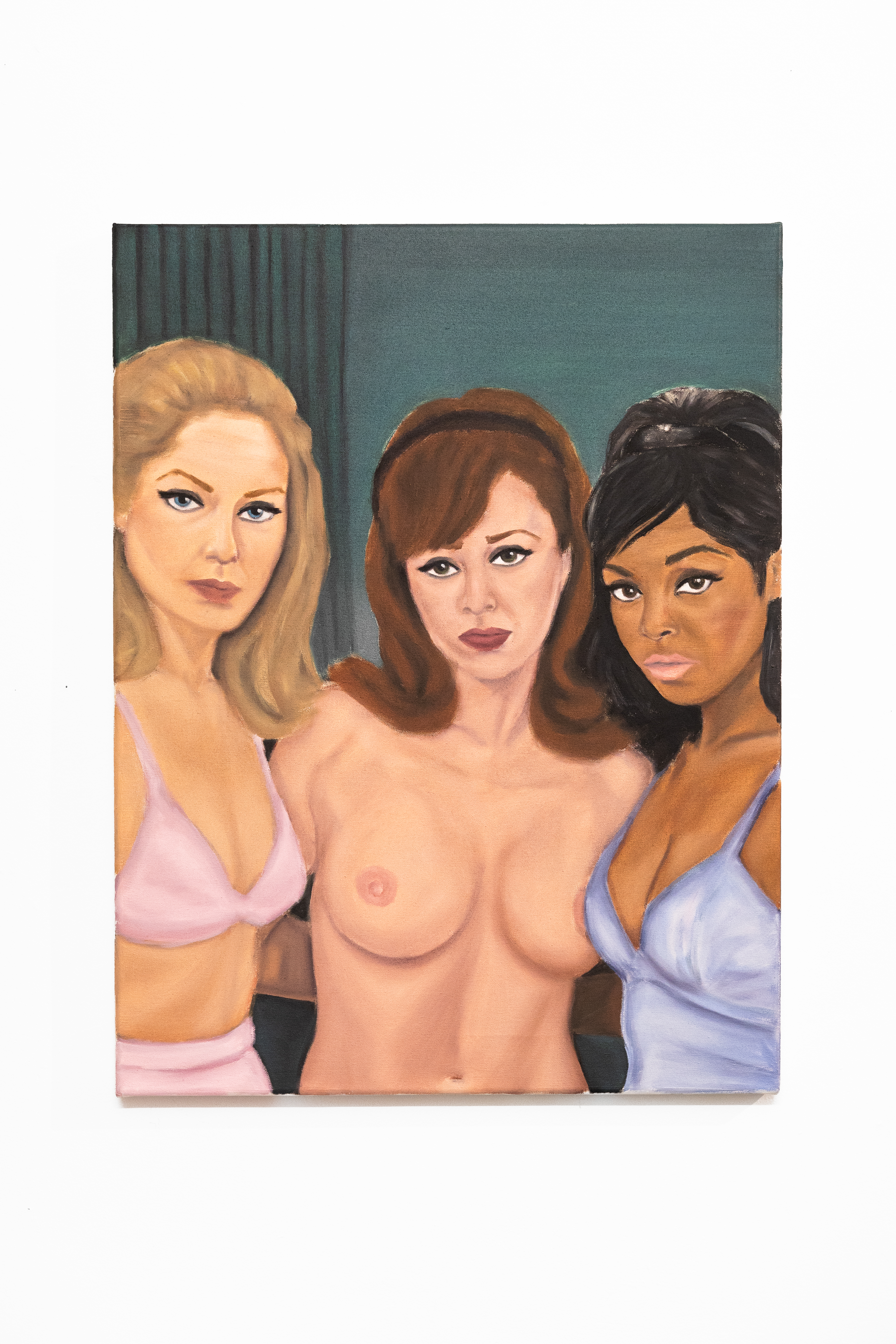
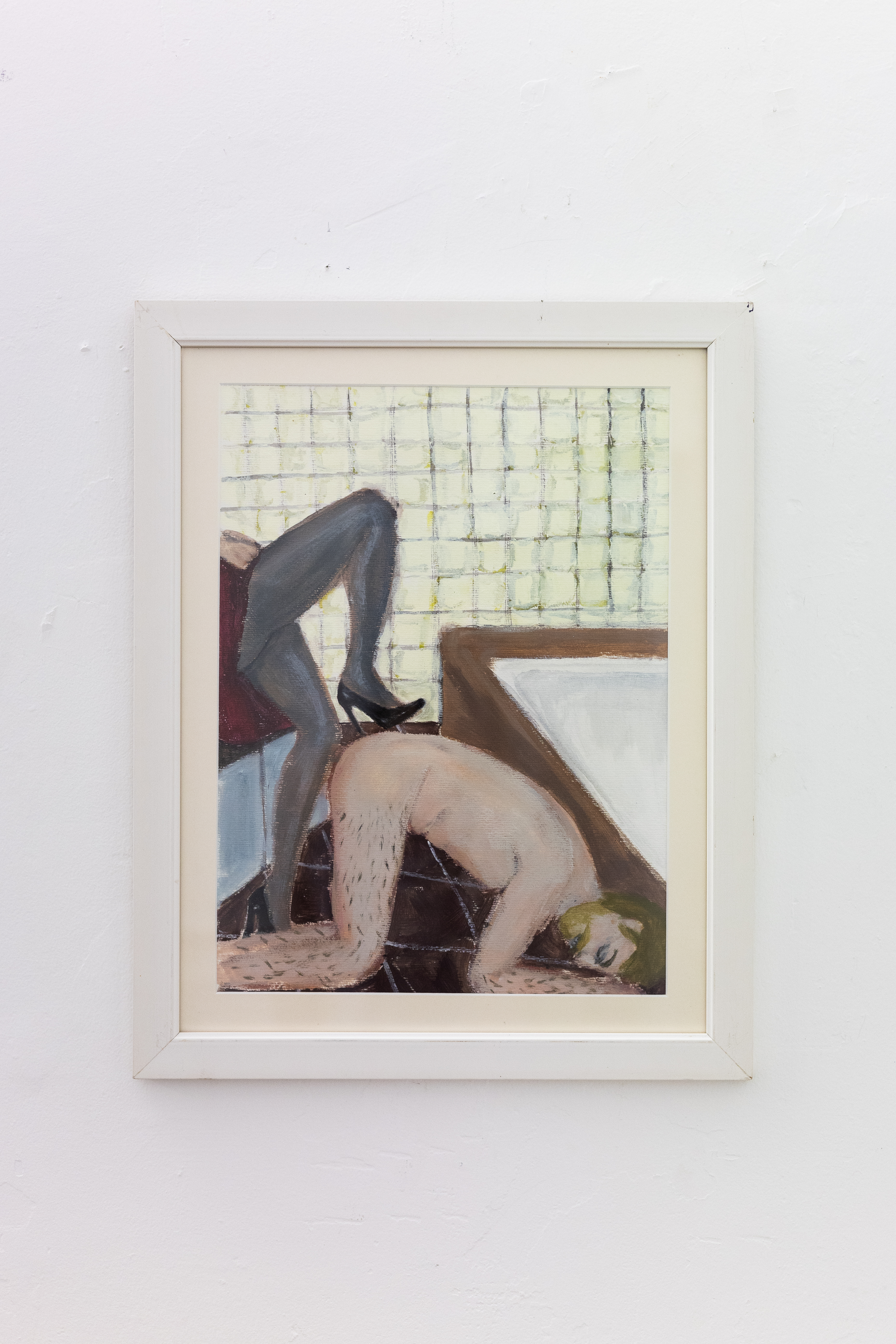
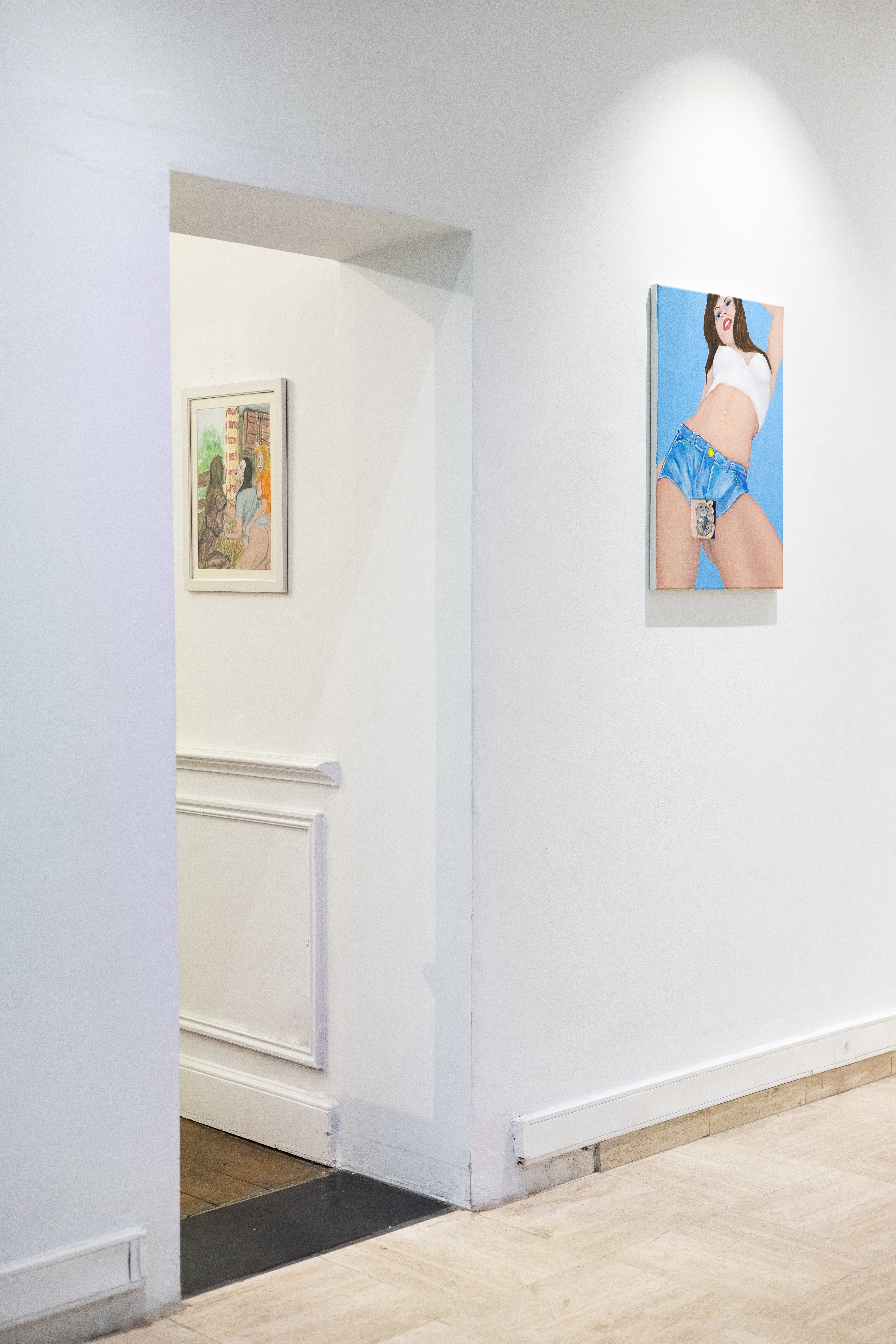
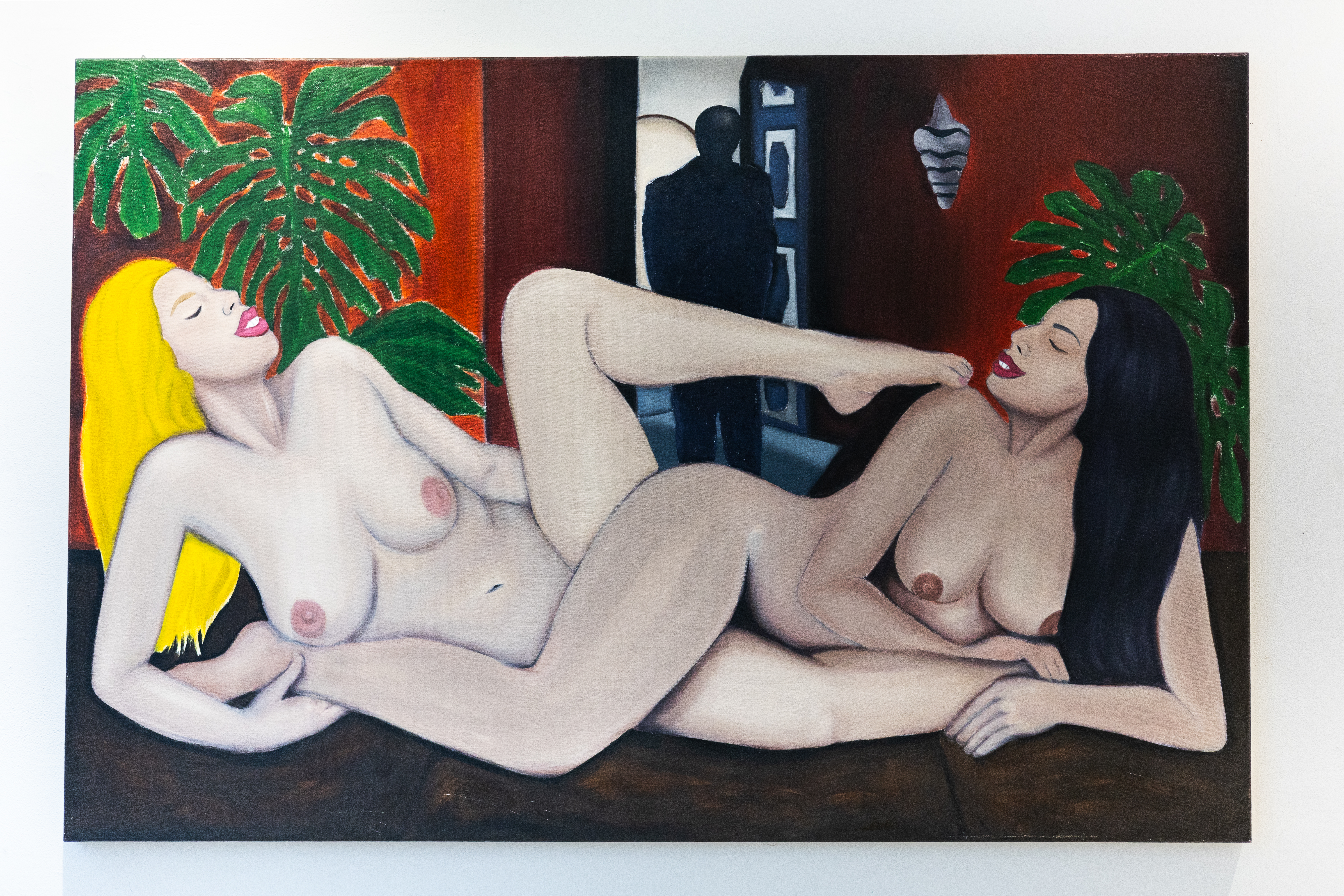
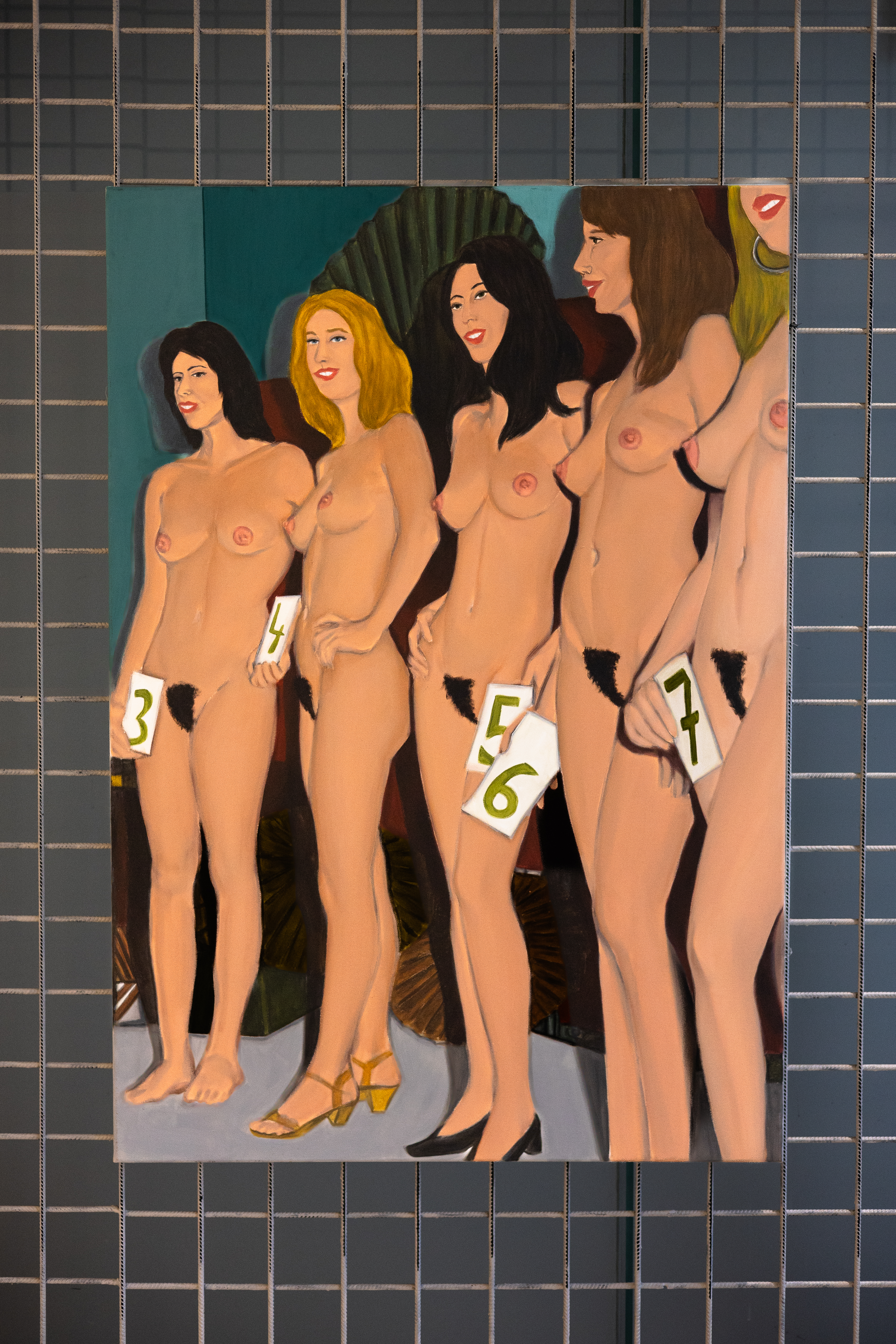
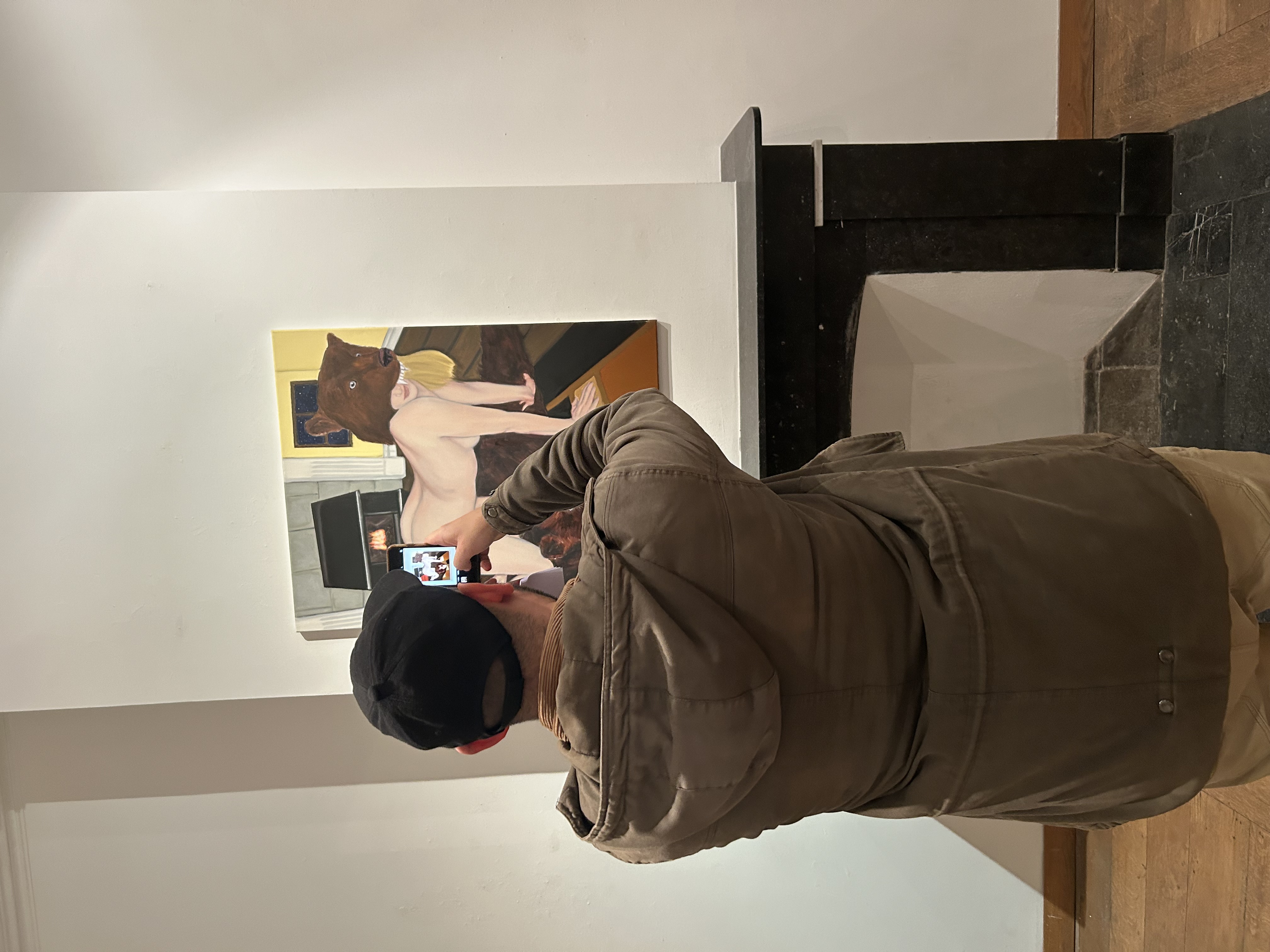
The Madonna or the depraved woman are still too often the only two possible options for a woman and her sexuality, argues Anna Mária Beňova, and her paintings scream it.
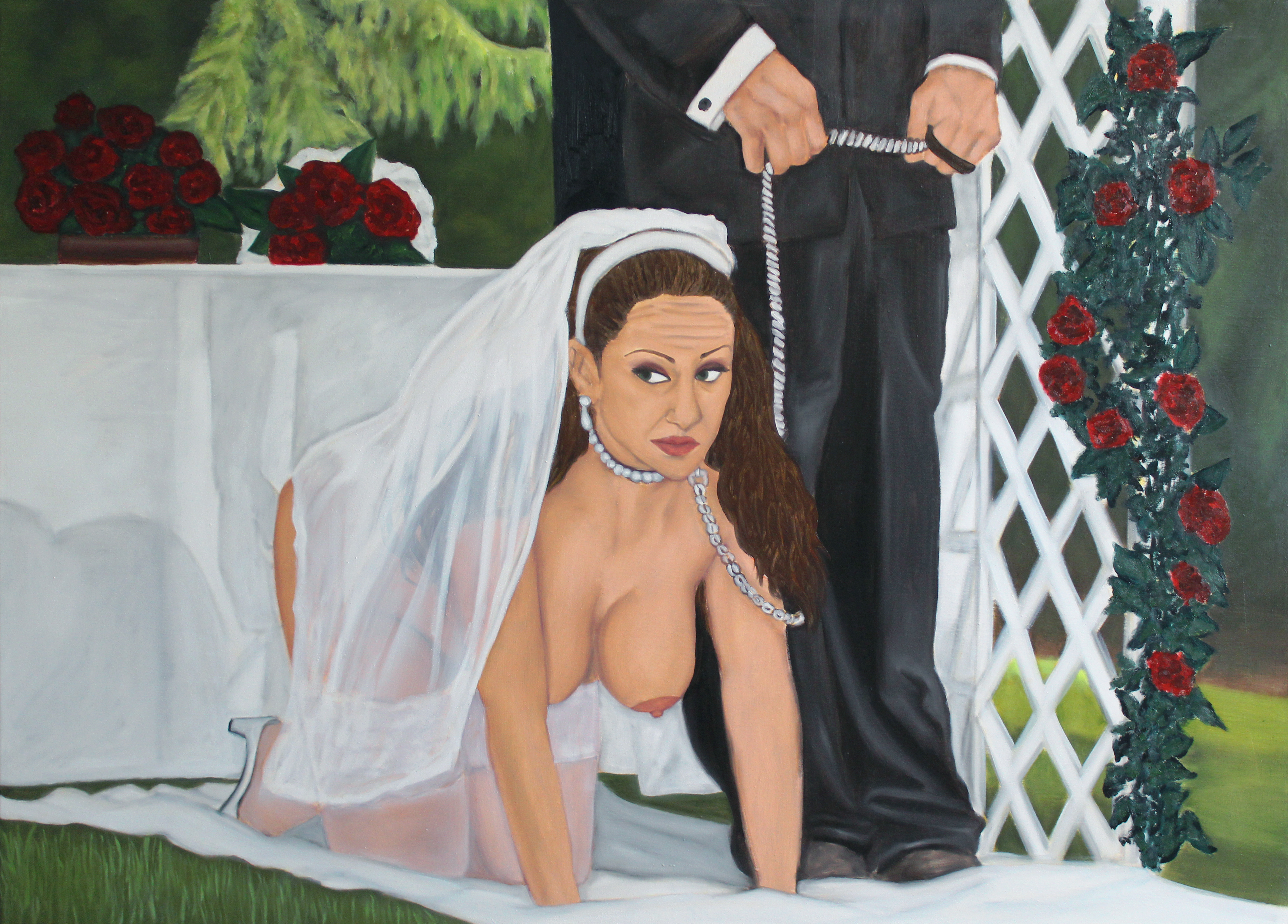
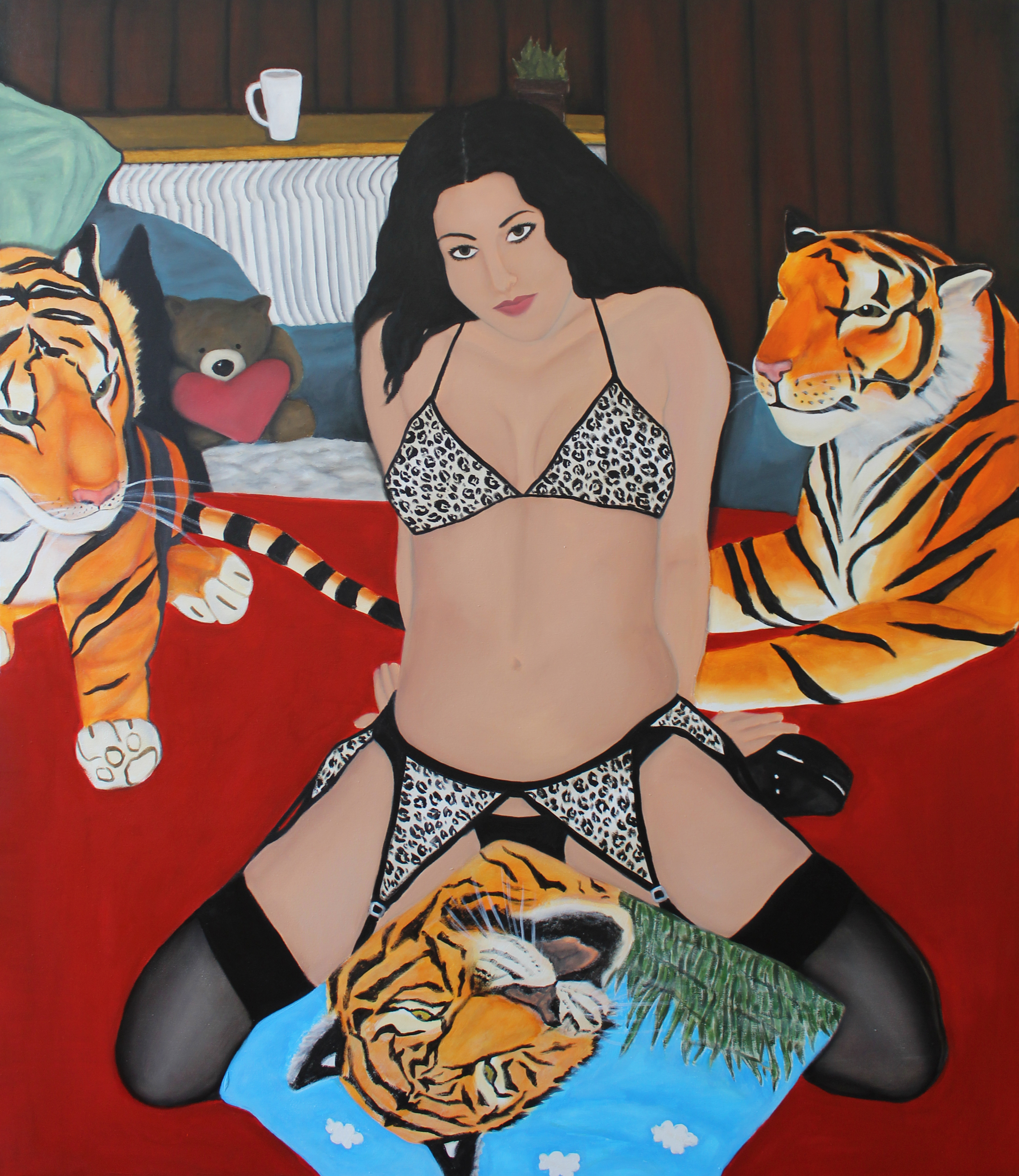
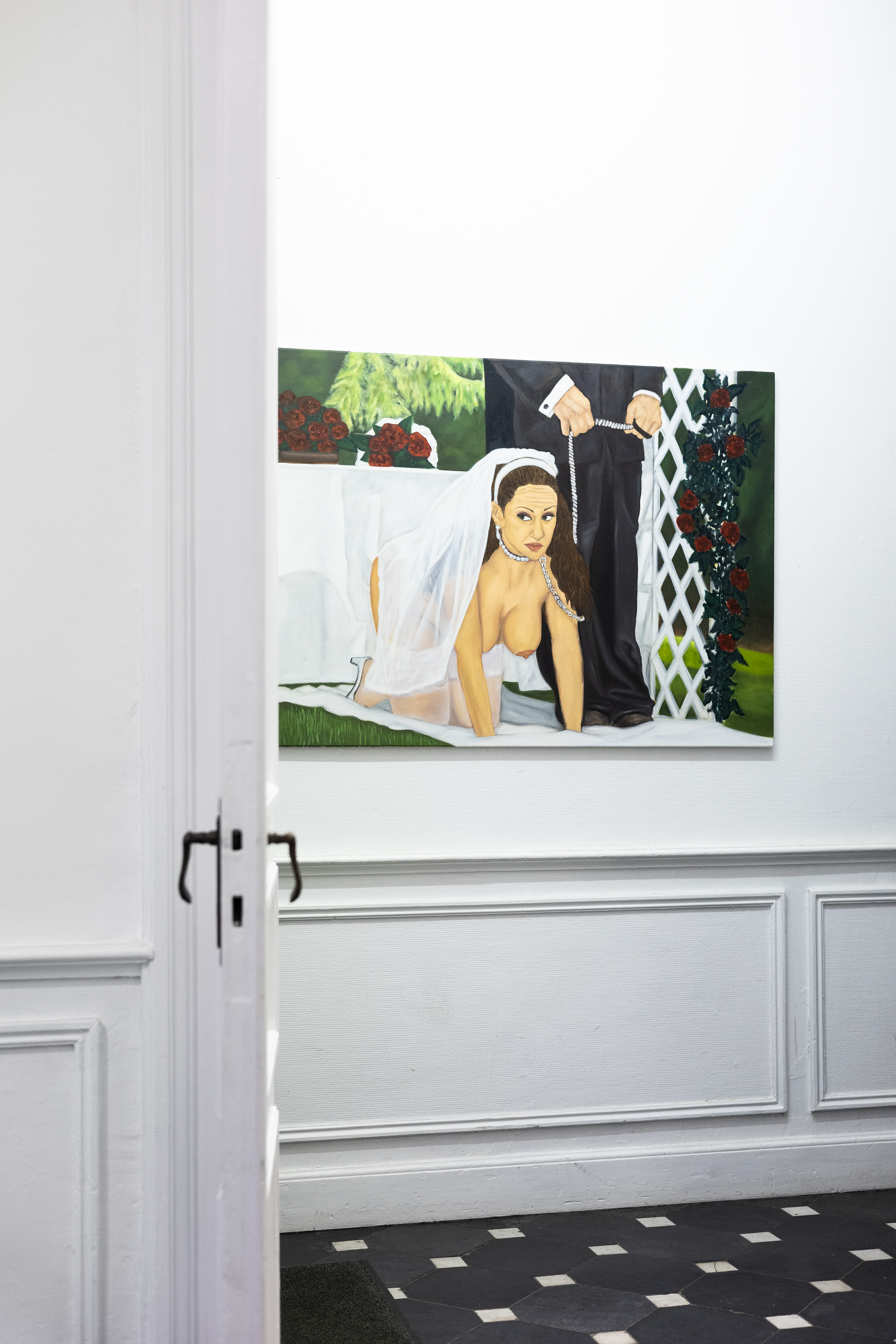
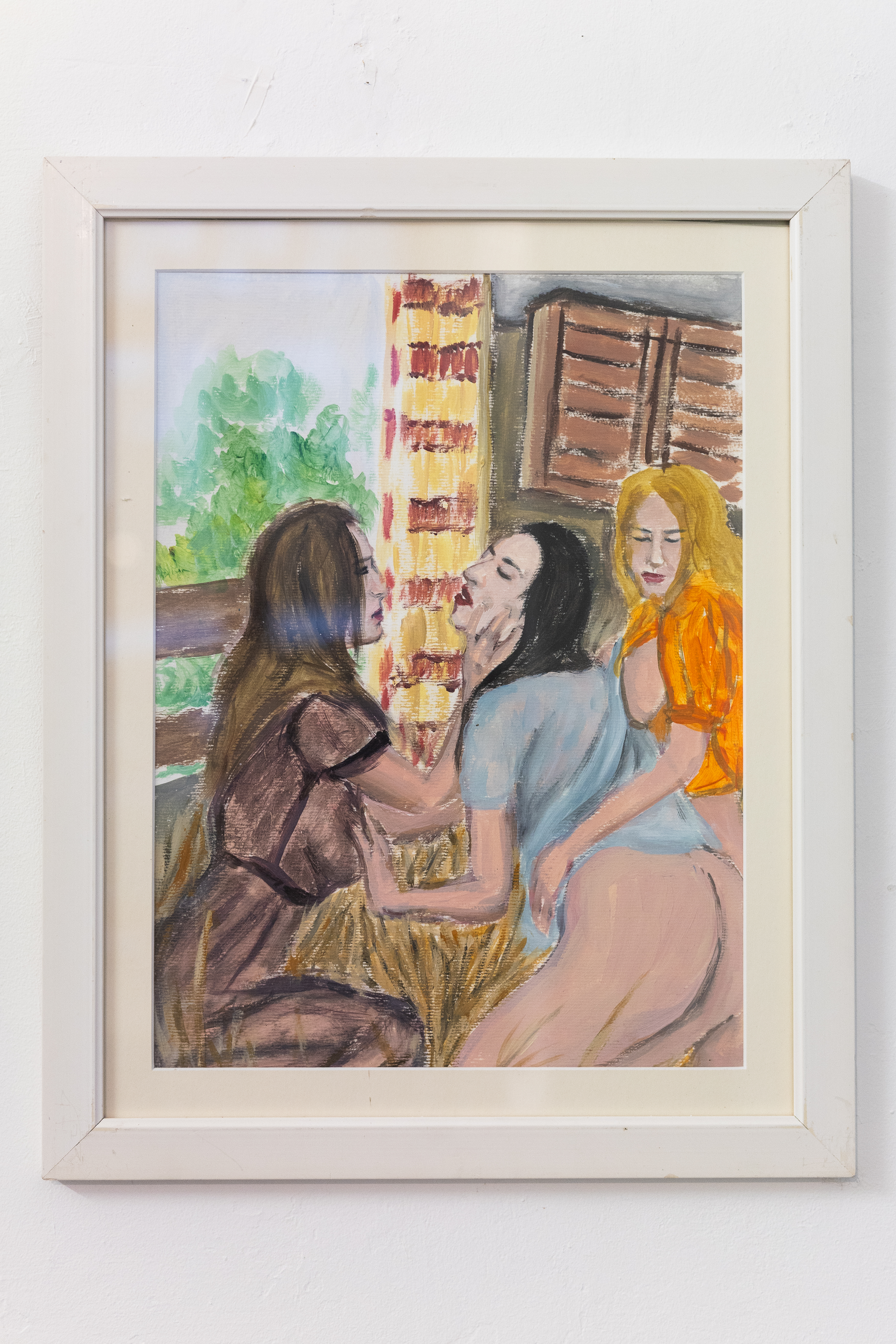
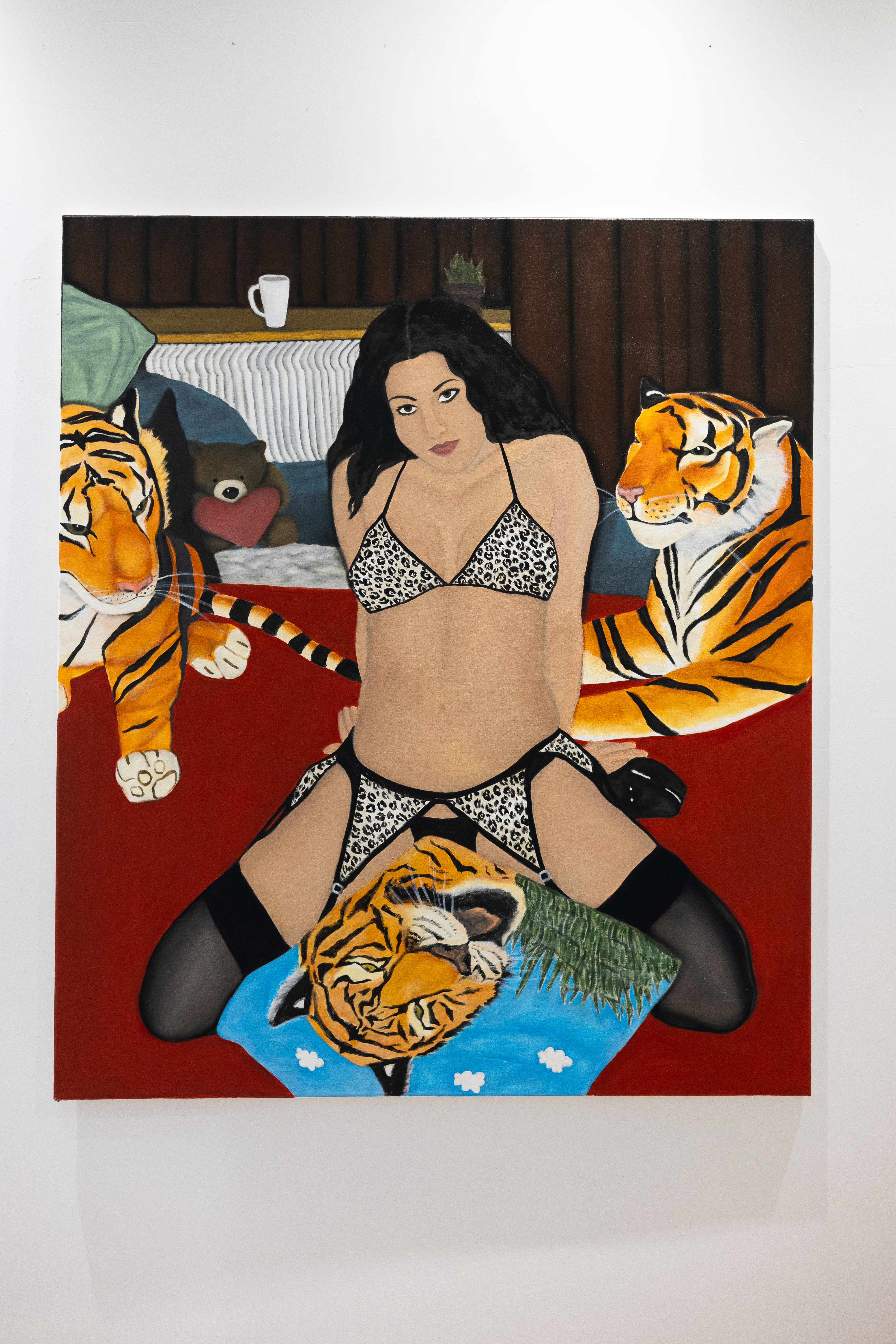
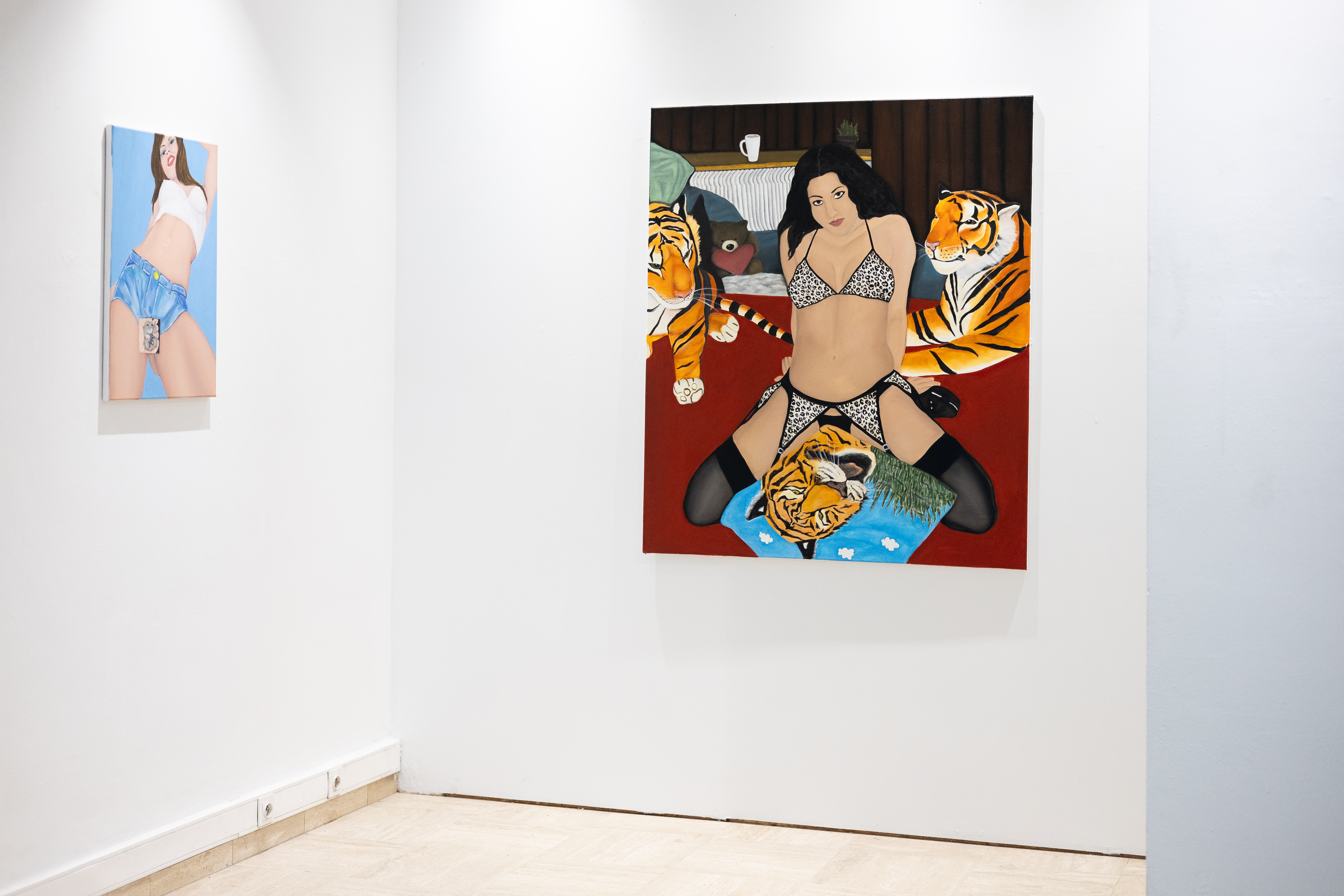
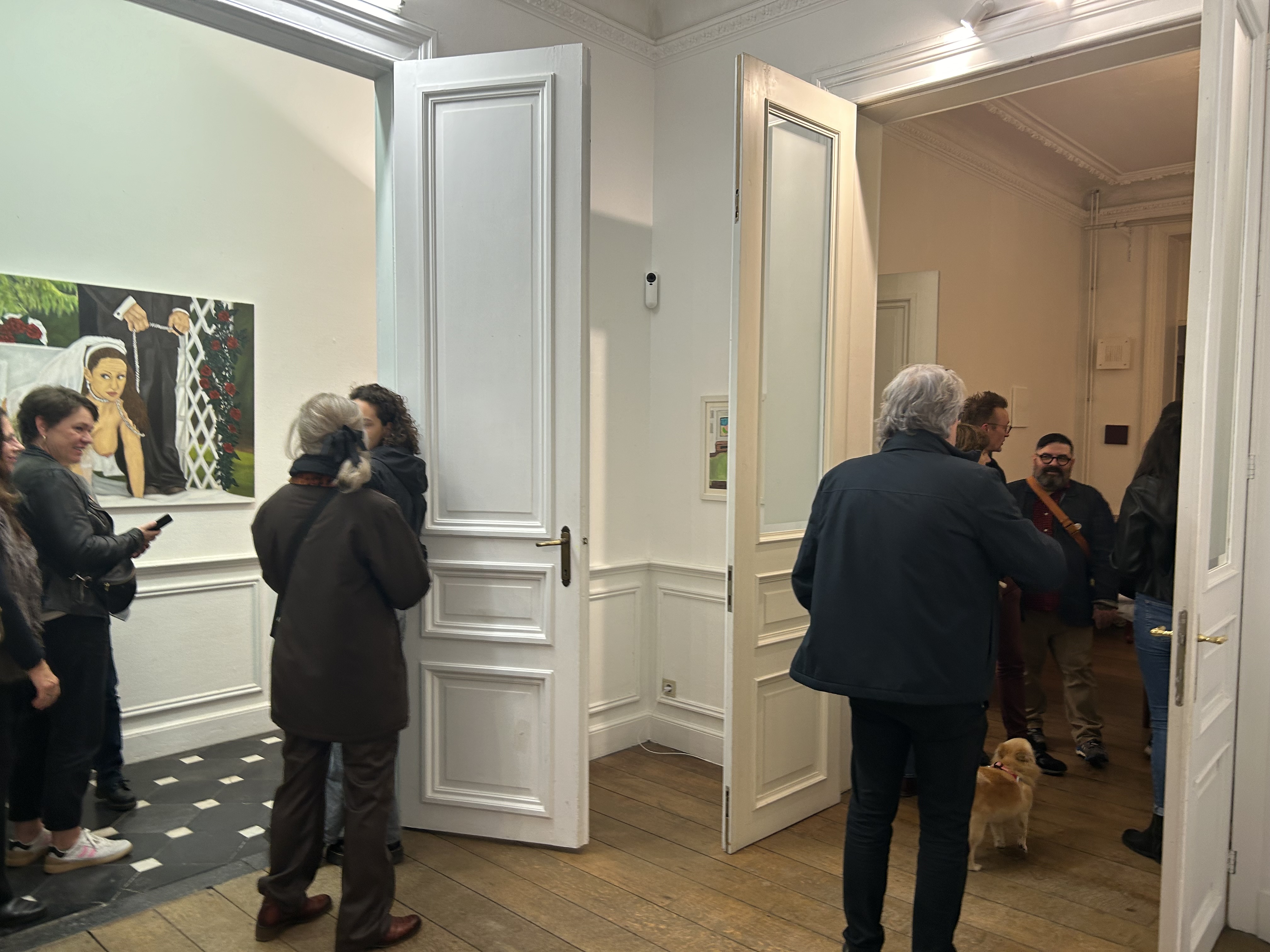
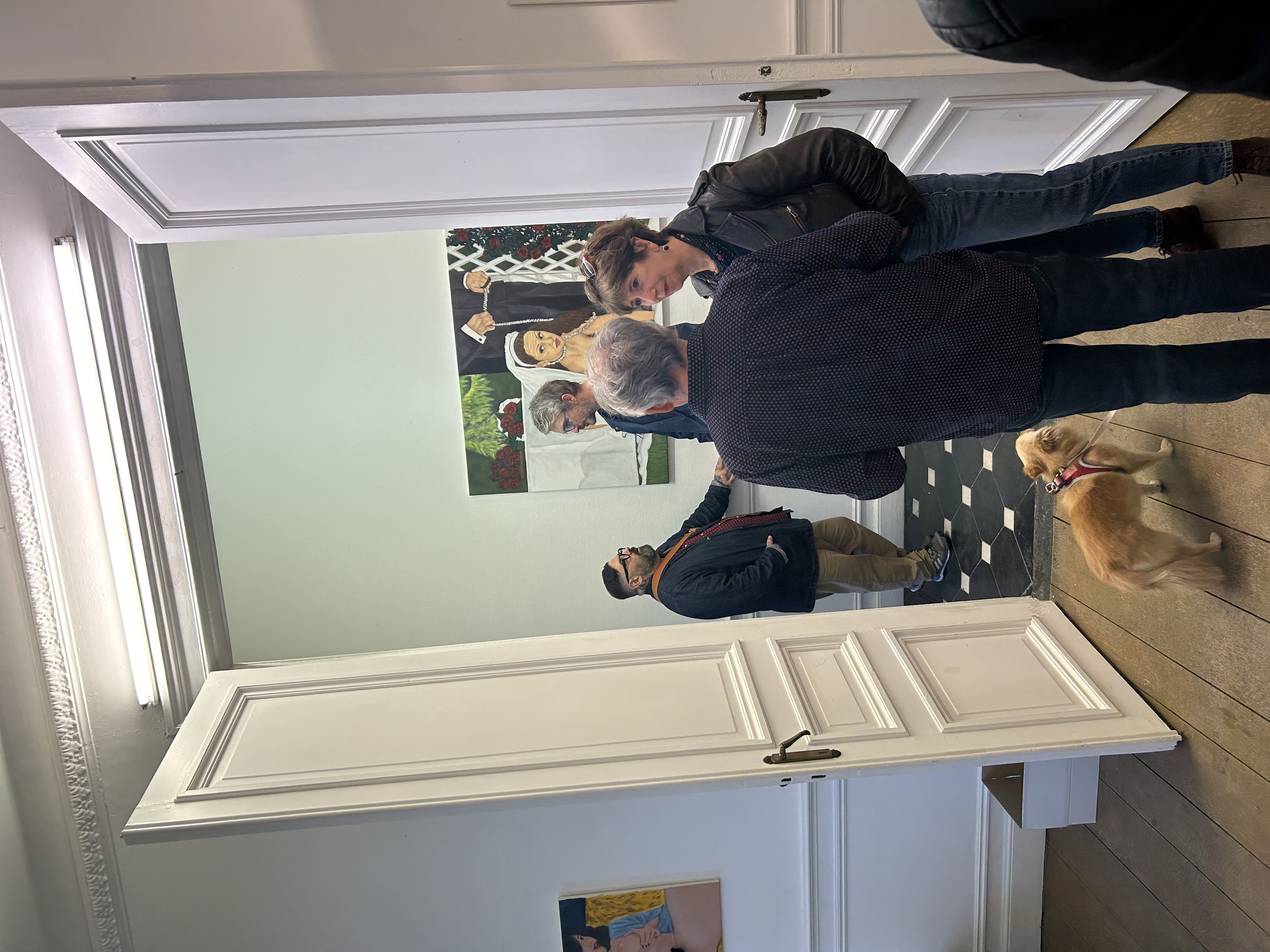
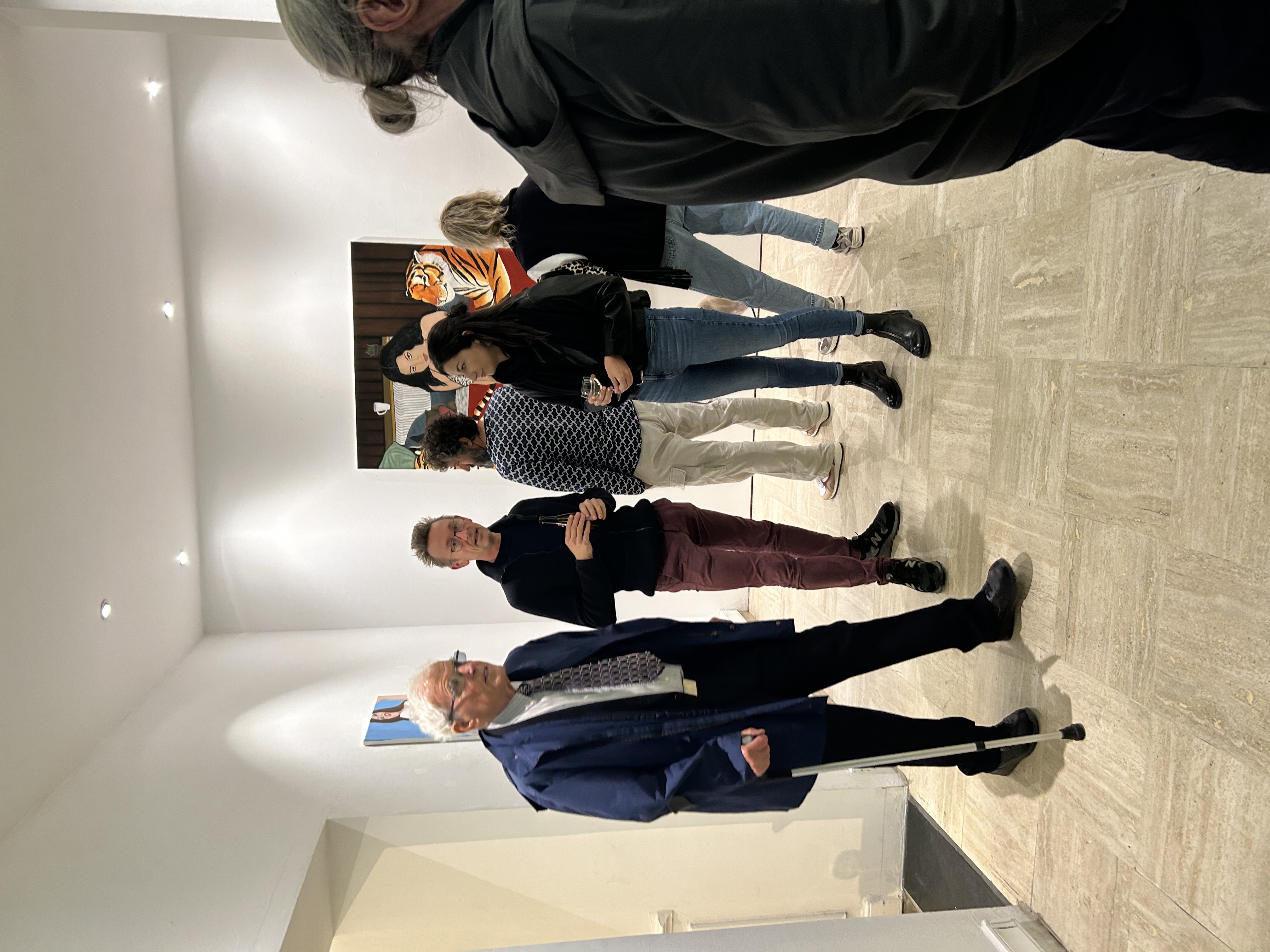
More cats; kittens and very large cats. Panthers, tigresses, a spotted woman and a bride on a leash, feline and cuddly women, trying to juggle all the codes and tragicomic poses one must master to please. Then we notice that teddy bear holding a heart in its paws, in the background…
We navigate blindly between a Feminine whose only wild attribute is the pseudo-aesthetic features borrowed from the animal kingdom to flatter the hunter in man, and a Feminine stripped of its claws, even more sanguine, that reassures and coddles the little boy in each of these overgrown children.
One wonders who is attached to whom in these stories?
But the message of these young artists goes far beyond their feminist, even overtly political, commitment. In her paintings, while she's at it, Anna Mária questions relational clichés as a whole and doesn't hesitate to take a swipe at the equally unhealthy representations of the Masculine in our daily lives.
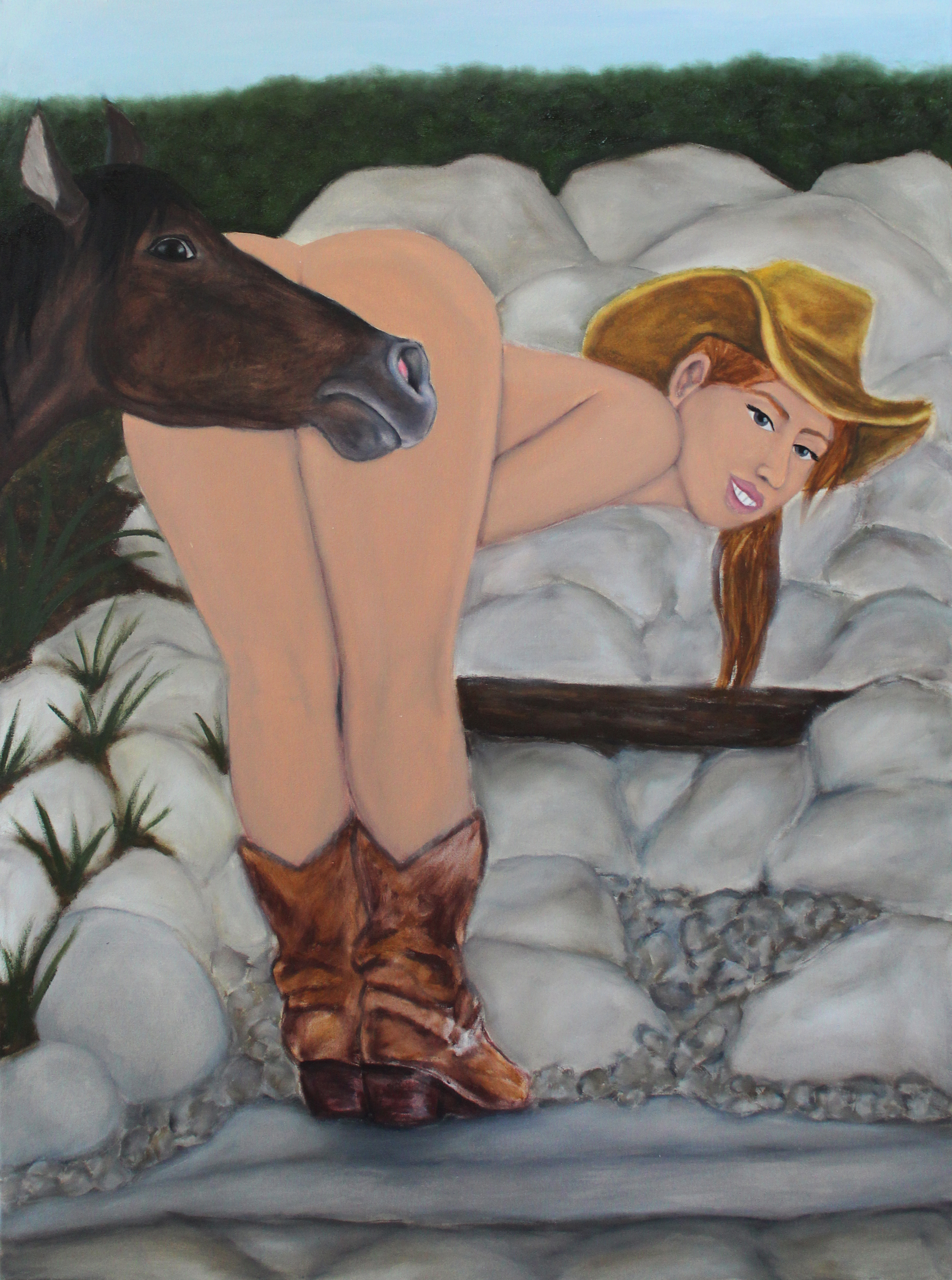
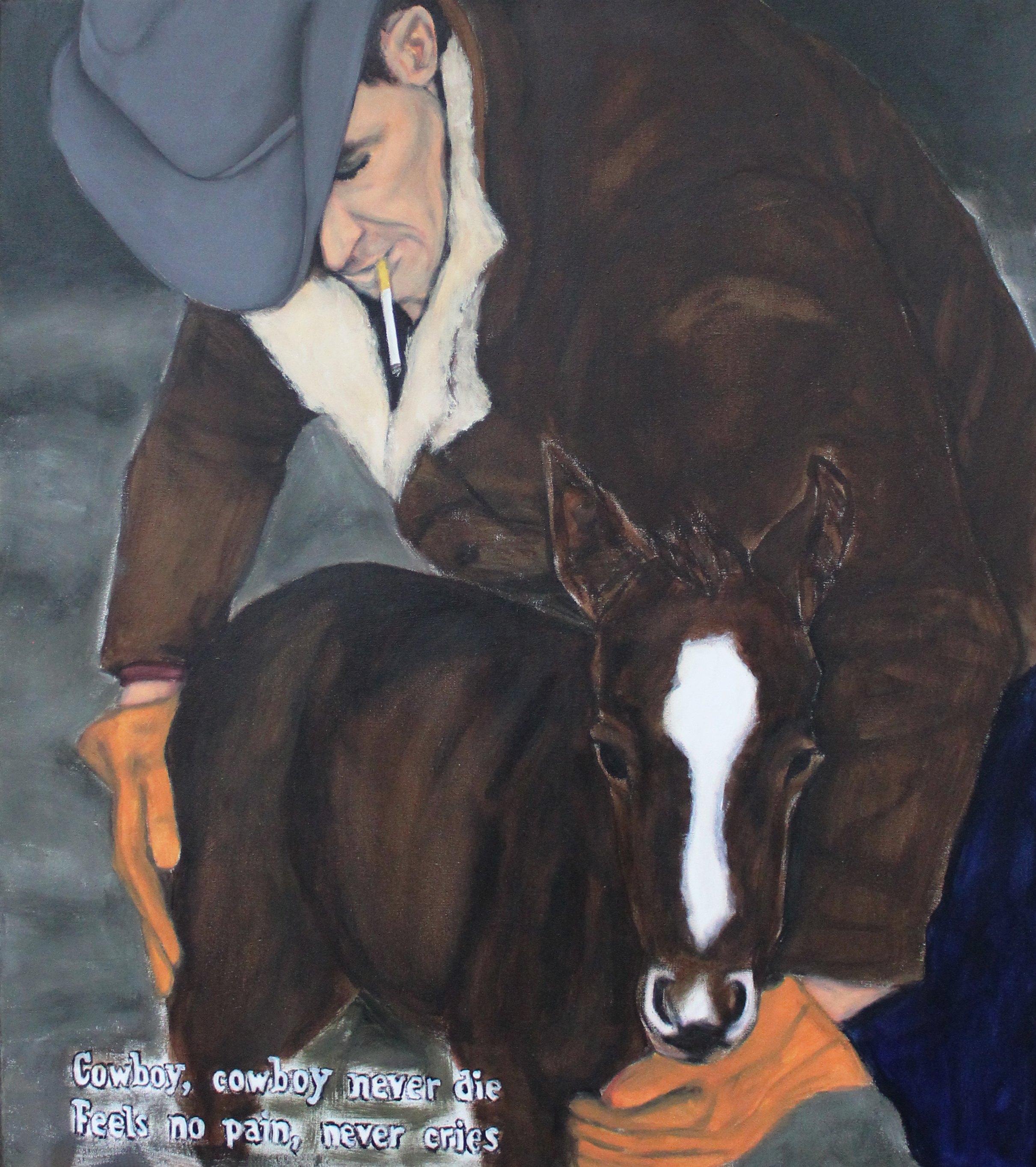
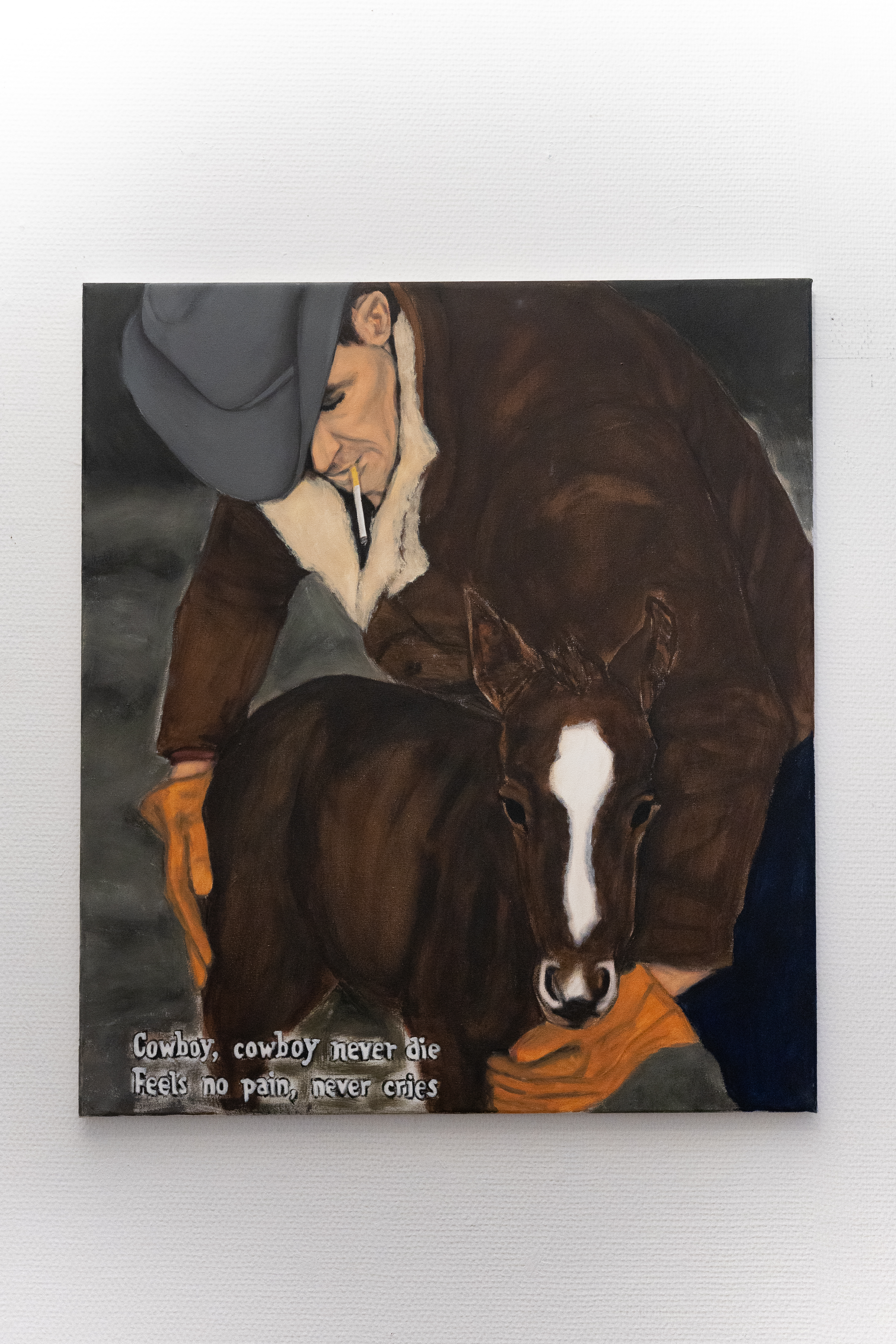
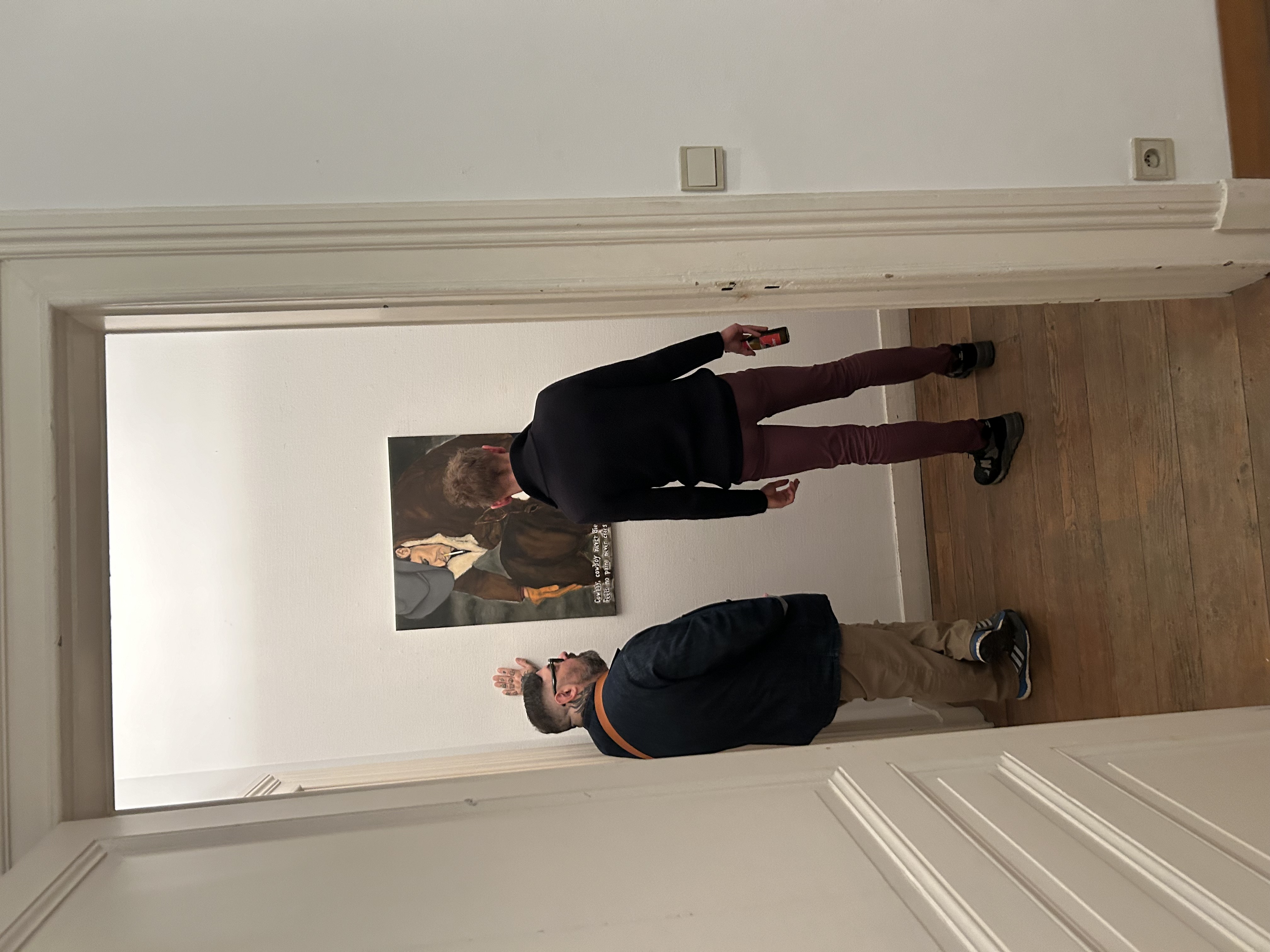
Thus, the famous Marlboro cowboy, the archetype of the guy who's got it made, recites his mantra: "Cowboy, cowboy never die / Feels no pain, never cries" (see Lindemann's "Cowboy") while leaning over a foal, cigarette in mouth (the man's, not the foal's).
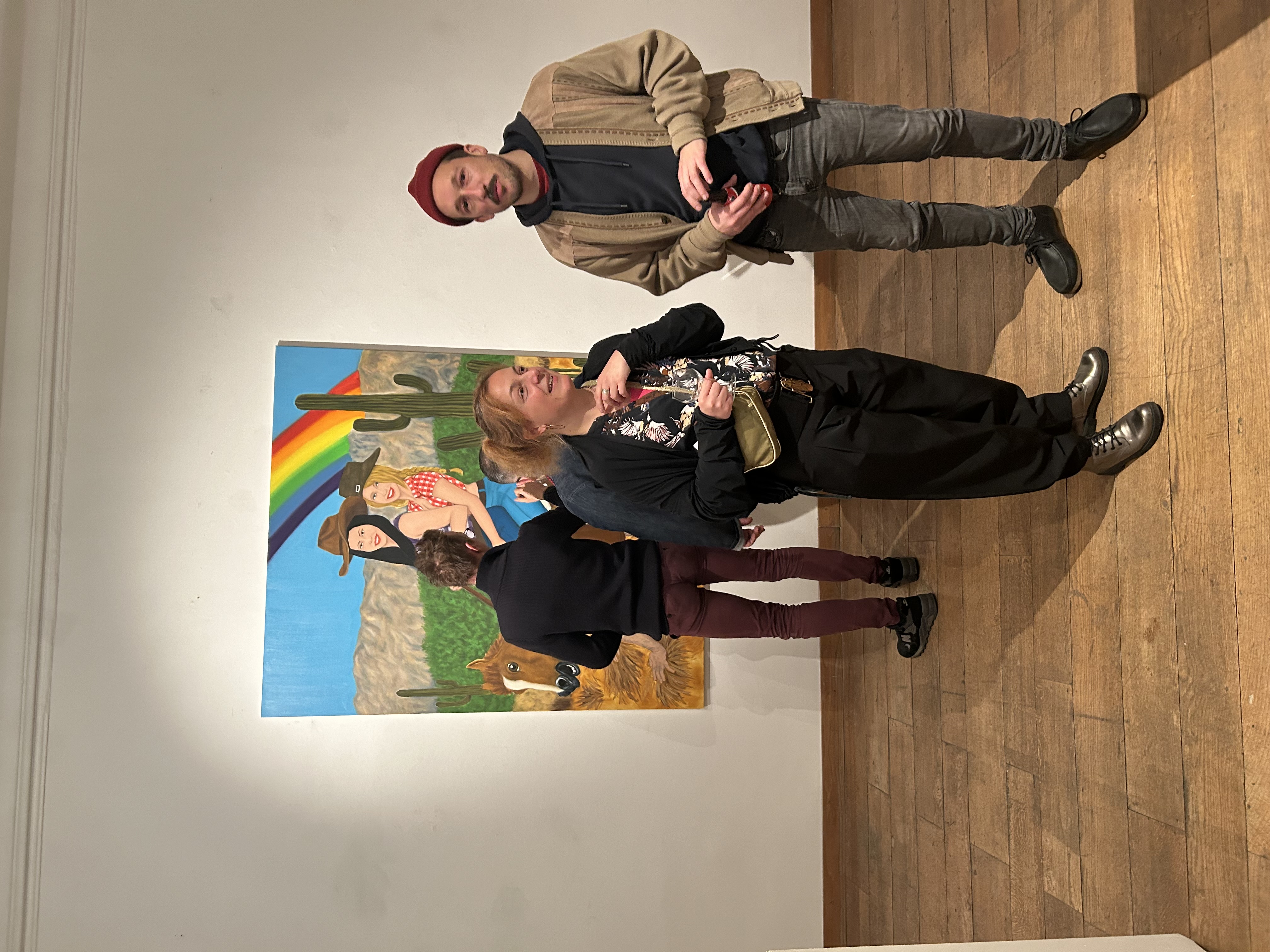
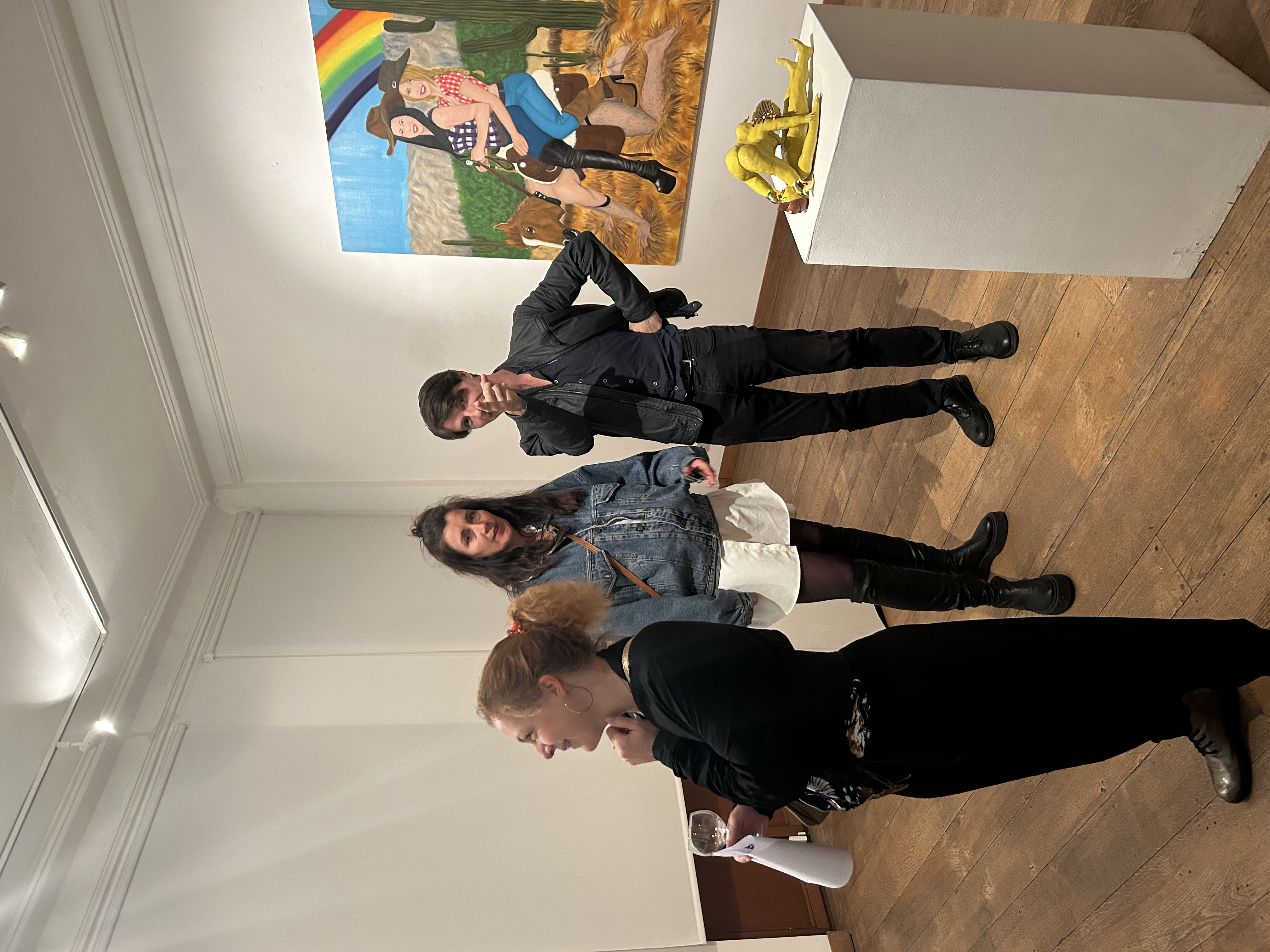
Further on, one of his fellows is adorned with a horse's head, saddled and ridden by two radiant cowgirls in boots, in front of a rainbow.
There's a lot of laughter, but here and there, the subjects' gazes are ambiguous and thought-provoking; we're unsure which emotions are being read in them and which are our own.
Another musical nod is found in the exhibition's title, "She Don't Like Her Eggs All Runny," taken from the song "In Spite of Ourselves," notably performed by the Viagra Boys and Amy Taylor.
Anna Mária explains that it wasn't chosen by chance but to signal from the outset that irony is in the air. But above all, these are two perspectives on the world, neither of which pulls any punches, despite their considerable technical skill. They offer a precise and valuable feminism that leaves a lasting impression, humorous just enough to make it all go down smoothly, but far less lighthearted than it initially appears.
While we wait to be able to remove our masks and get our socks white again, we can put on a sweater, throw away our lassos and rush to (re)see this exhibition.
Evelyne Hanse
Review of the exhibition :
https://fluxnews.be/whats-new-pussycat/





This project has been supported using public funds provided by Slovak Arts Council